Should a commercial roof be repaired, restored or replaced?
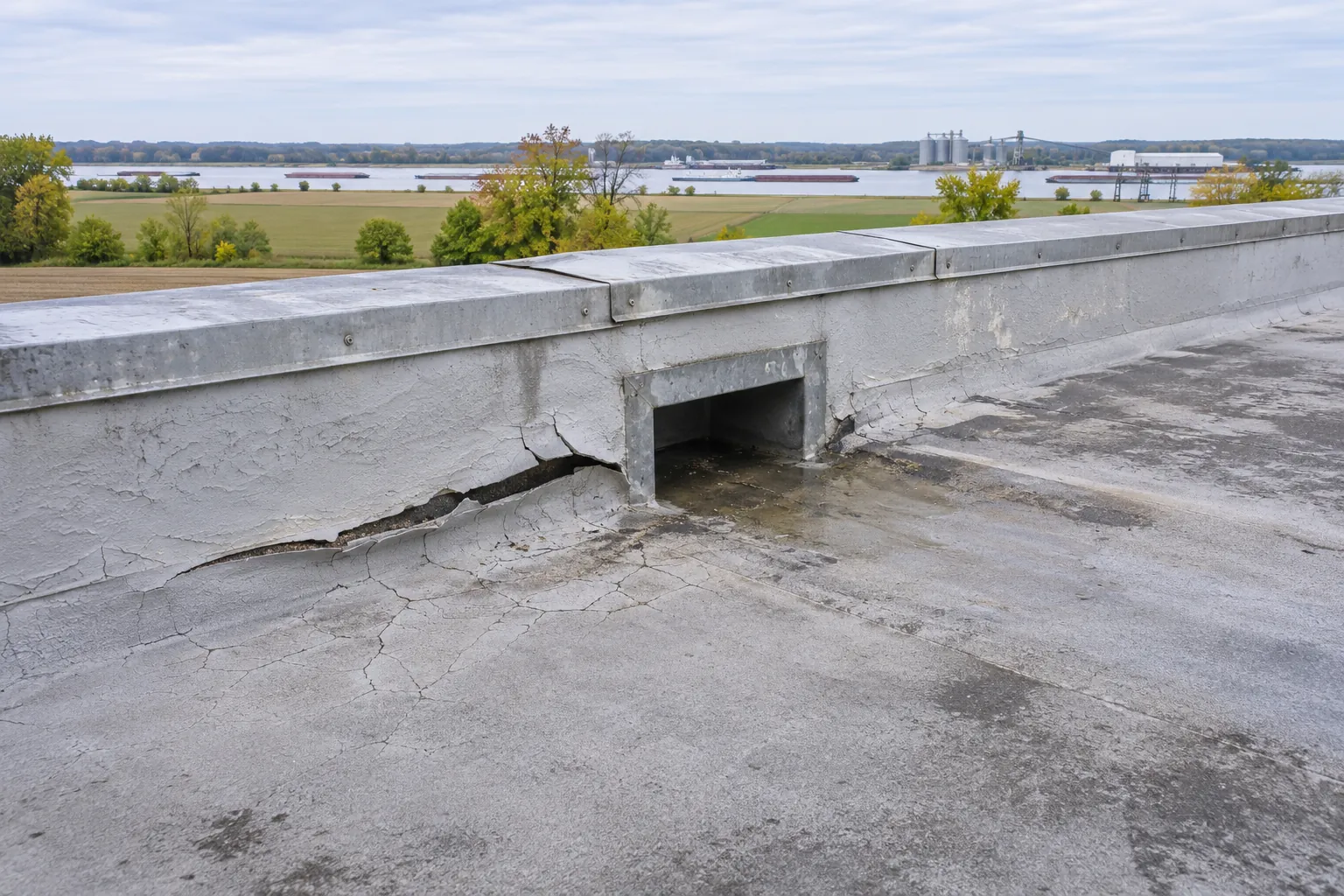
It comes down to how far the damage reaches. A few leaks, open seams, or loose screws call for repair. A surface weathered evenly over dry insulation suits restoration: cleaning, seam and fastener prep, then a fluid-applied coating.
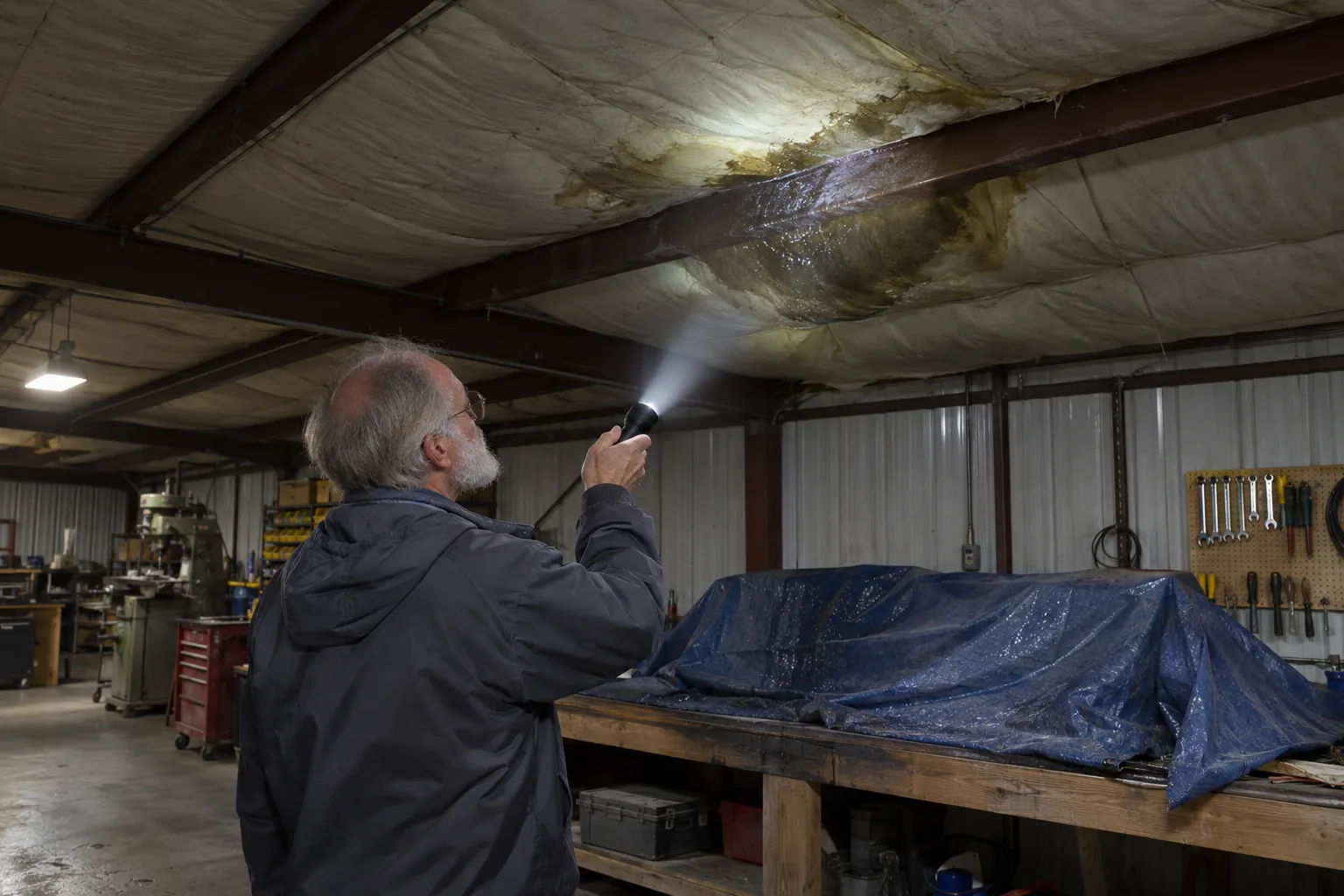
Wet insulation over wide areas or a damaged deck points to tear-off or a recover, and a moisture scan draws that line.
What does a permanent roof repair do that a temporary one cannot?
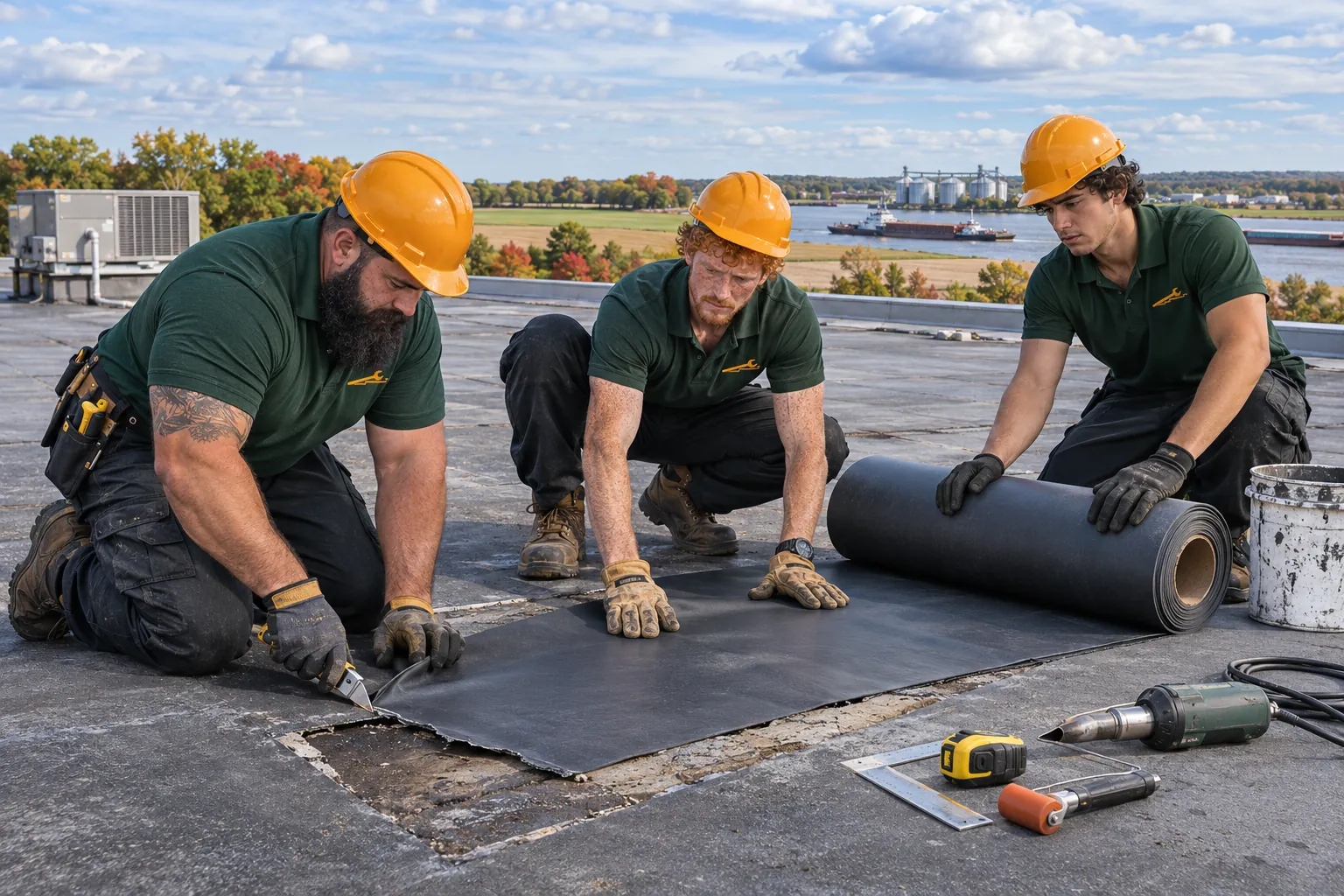
A temporary repair keeps water off stock and ceilings until conditions allow the real fix. The permanent repair rebuilds the failed seam, flashing, or panel with matching membrane, primer, welded or taped patches, and new fasteners on a clean, dry surface.
Mastic smeared over an open seam in a storm buys time, though left in place it traps water and makes the later weld harder.
When do repeat repairs cost more than a bigger fix?
Repeat repairs start losing money when leaks appear in new places every season, new patches overlap old ones, and wet insulation spreads between visits.
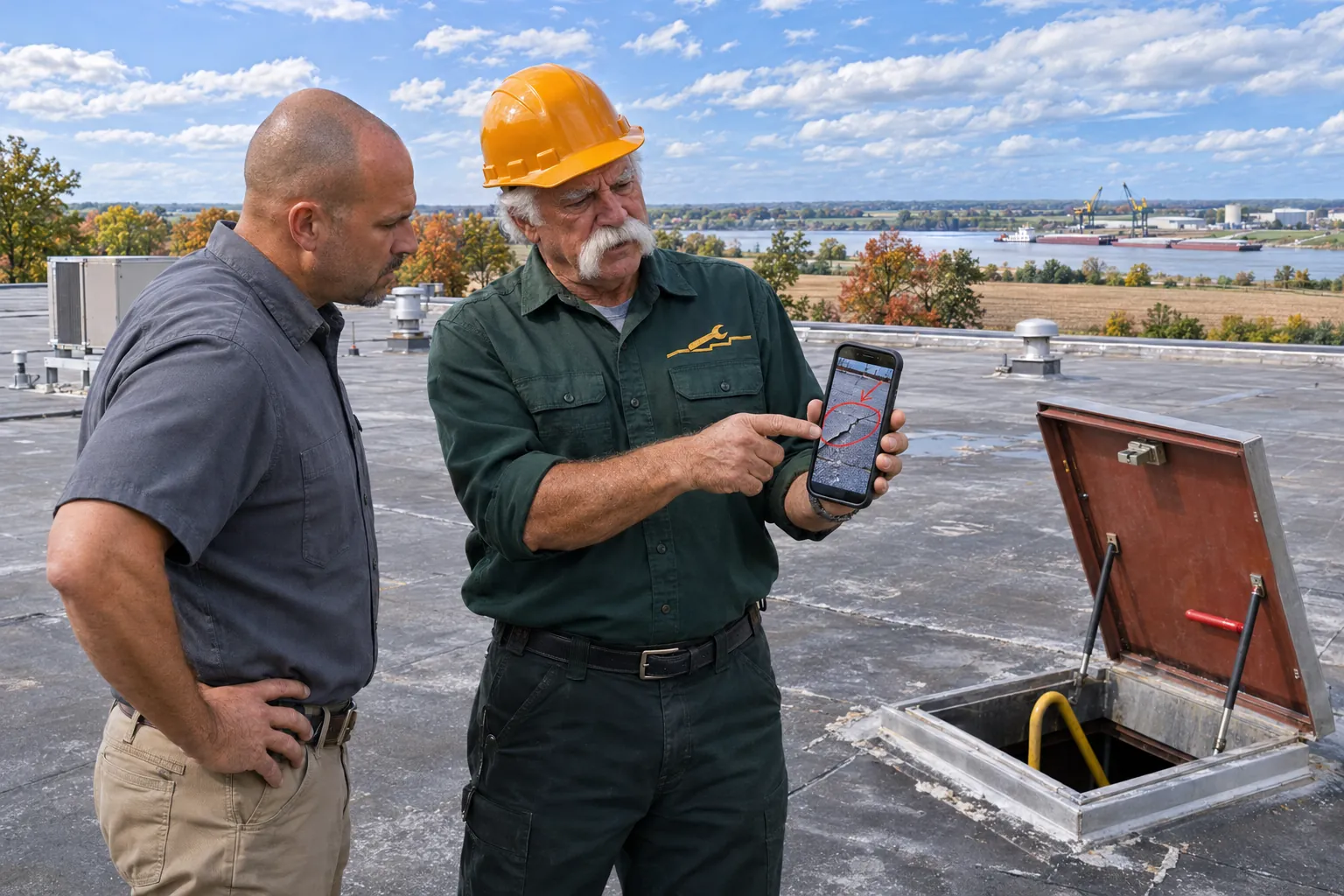
A simple log of each leak, its spot on a roof sketch, the date, and the fix shows the trend. When most entries sit in one area, replacing that section can cost less than patching it again.
Can one visit cover a membrane roof and a metal roof on the same property?
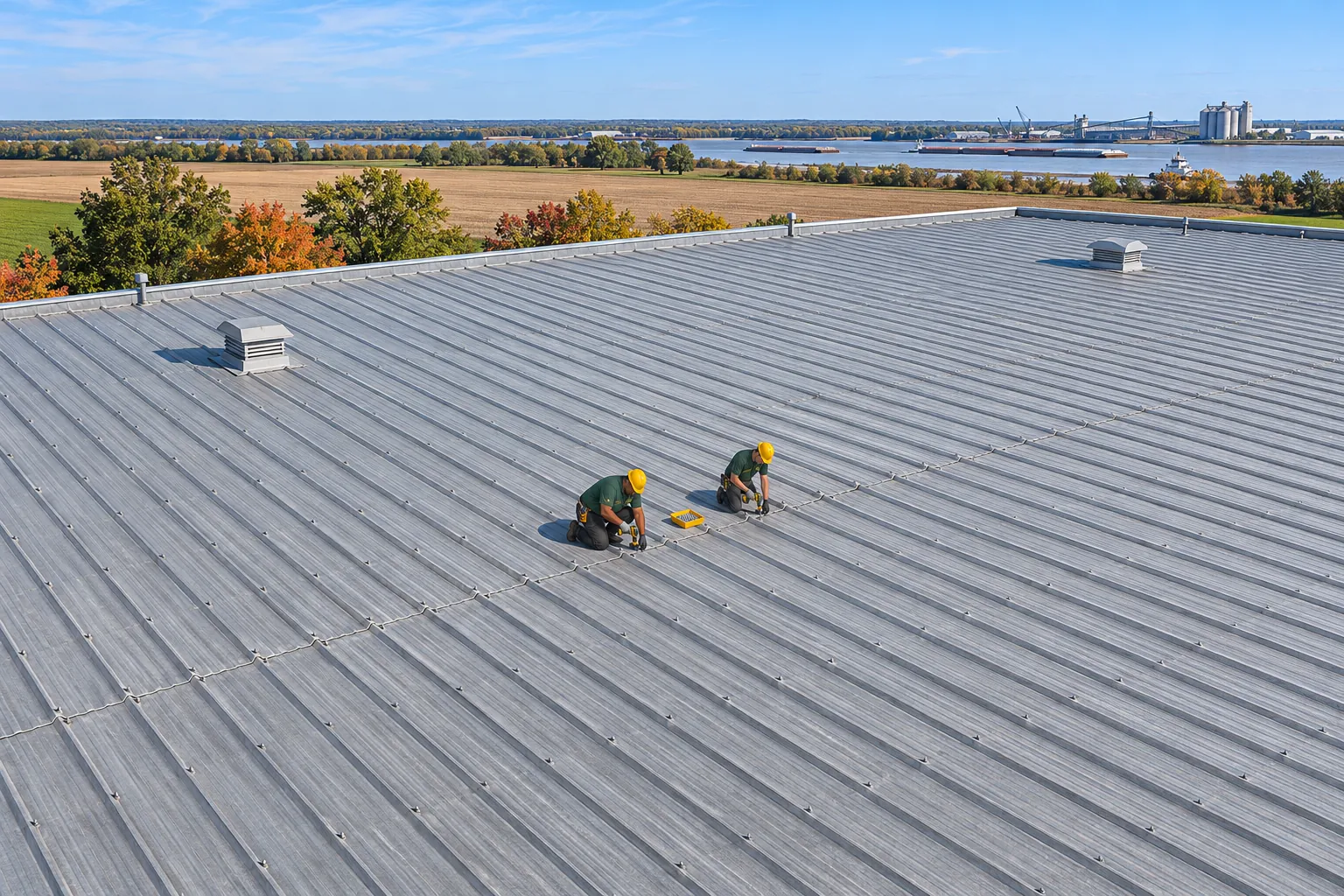
Yes. Plenty of properties pair a low-slope office or shop section with a metal warehouse or canopy. The roof walk covers both, and each repair uses the materials of the roof it sits on, so the membrane side gets matching sheet and the metal side gets same-profile panels and fasteners.
How do I know which repair service fits my roof?
Start with the roof under the stain. Membrane roofs with seams and flashings go to flat roof repair, steel panels with screws and laps go to metal roof repair, and a plant roof with stacks and process fans goes to industrial repair.
When the source is unclear, leak repair traces it first, and the roof walk confirms the call before any work is priced.
Do roof repairs happen while the building stays open?
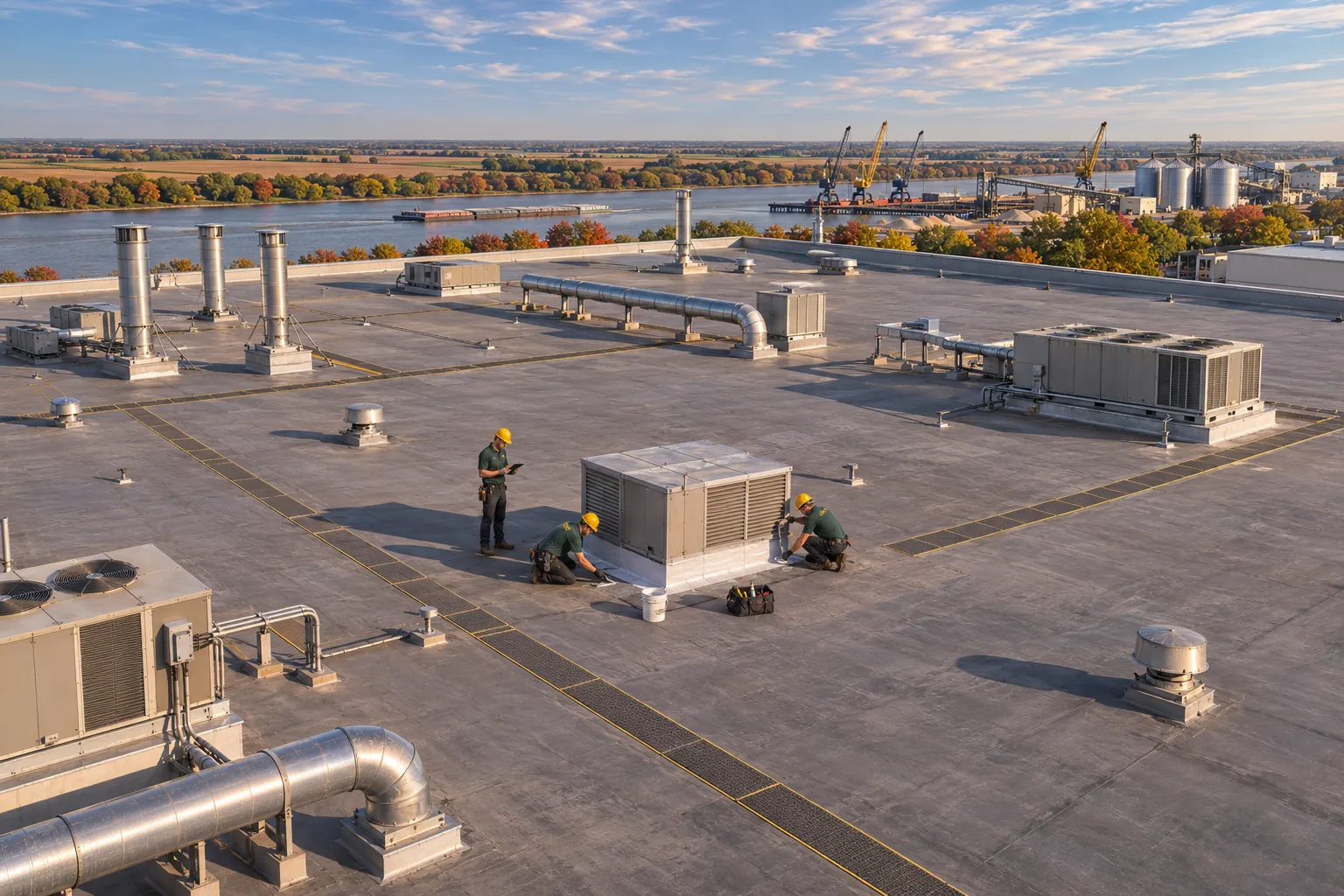
In most cases, yes. Work moves zone by zone, and the area under repair is kept clear while the rest of the building runs.
Plants, schools, and churches often schedule repairs near entrances, docks, or process equipment around their own calendars. Noisy work such as cutting out wet insulation can be timed for early hours or weekends when that suits the building.