Open TPO Welds
Aged TPO picks up a chalky film that blocks a new weld, so the lap gets scrubbed with membrane cleaner first. Laps that still refuse to fuse get a fresh TPO strip welded over the old seam.

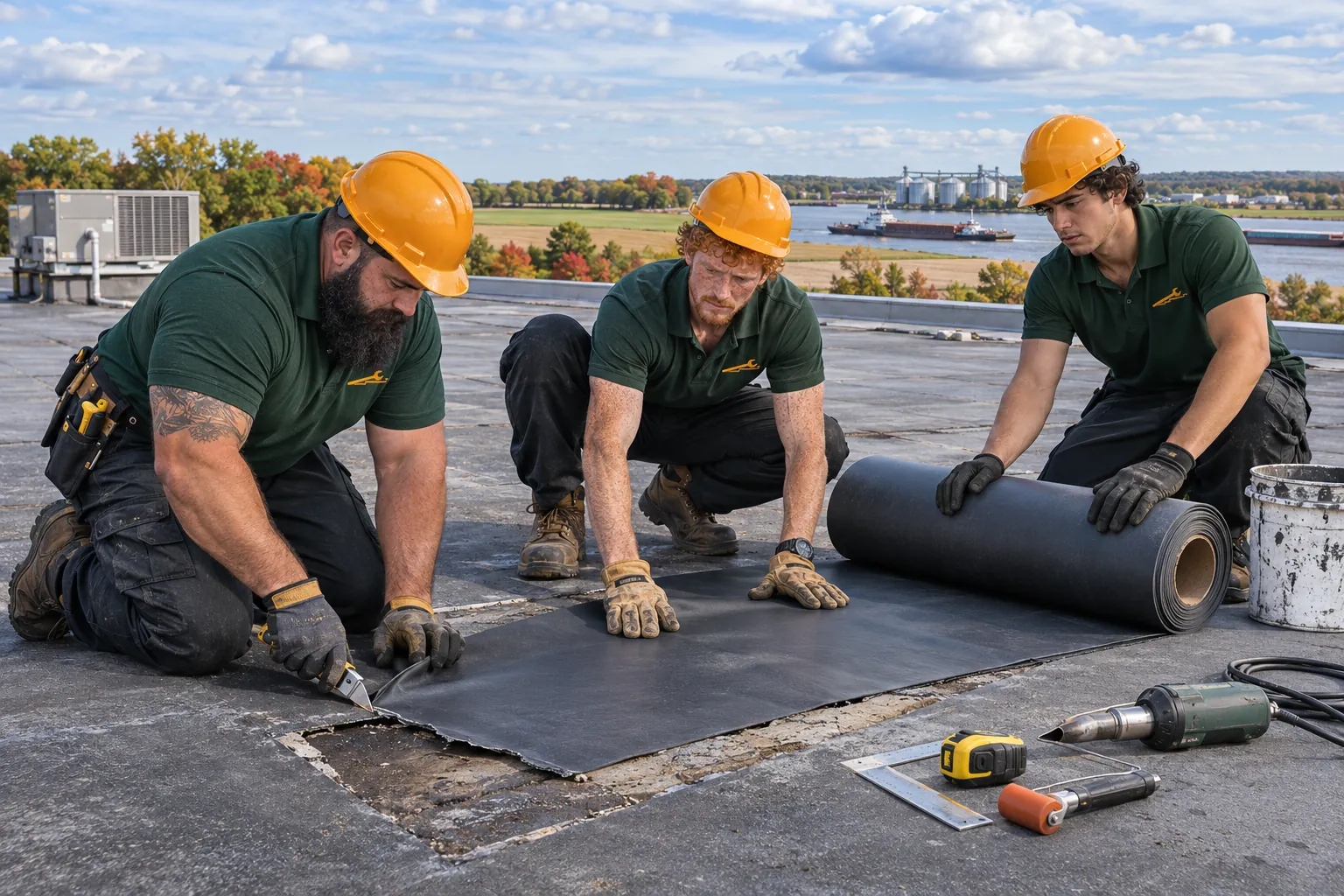
Paducah flat roof repair for TPO, EPDM, modified bitumen, and built-up roofs: we reweld seams, patch punctures, and rebuild the flashing that lets water in.
A Paducah flat roof repair starts by sorting the roof into one of three conditions. Dry insulation keeps both repair and restoration on the table.
Where Flat Roofs Start
Low-slope roofs fail at their joints and low spots first. These six conditions account for most of the flat roof leaks we trace in the area.
Aged TPO picks up a chalky film that blocks a new weld, so the lap gets scrubbed with membrane cleaner first. Laps that still refuse to fuse get a fresh TPO strip welded over the old seam.
Older EPDM laps glued with liquid adhesive let go along long runs. Those laps are peeled back, cleaned to bare rubber, primed, and closed with seam tape, with lap sealant at every T-joint.
Trapped moisture or air expands under the membrane or between plies on hot afternoons. Large, cracked, or growing blisters are cut open, dried, pressed down, and covered by a patch that reaches well past the cut.
Ponding means water still sitting a couple of days after rain. A clogged strainer, a drain bowl set too high, or a local low spot causes most of it, and each cause has its own repair.
Dropped tools, leftover screws from HVAC service, hail, and fallen branches poke holes in the sheet. One puncture usually means others nearby, so the whole work zone gets searched before patching.
When the sheet shrinks, it bridges tight across the base of parapet walls and curbs. That bridging tears flashing loose and is one of the signs a roof is moving past simple repair.
Each repair below answers one cause. The probe and moisture readings under the damaged spot decide which one the roof gets.
Hot-air welding closes TPO laps once they are cleaned down to fresh membrane. EPDM laps get primer, new seam tape or a cover strip, and lap sealant along the edge.
Cuts and holes get a round-cornered patch of matching membrane running several inches past the damage, welded or taped after the area is cleaned and the insulation checked.
Strainers and scuppers are cleared, drain bowls reset flush with the roof surface, and tapered crickets set under a new membrane patch where water collects.
Insulation that reads wet or feels soft under a leak is cut out to the deck, replaced with new board, and covered before the membrane repair goes on.
A flat roof repair done at the right time keeps the membrane in service and holds the cost to the area that failed.
Fixing a single open lap means one weld or one strip of tape. Waiting lets water spread through the insulation until several feet of board have to come out.
Dry polyiso holds its insulating value. Once a seam leak soaks it, the board loses much of that value and holds water against the steel or wood deck.
A roof with dry insulation can still be cleaned, prepped, and coated later. Keeping leaks closed protects that option and pushes a tear-off further out.
Walkway pads added along the service route after a puncture repair keep boots and carts off the bare sheet around rooftop units and roof hatches.
Call us with the roof type and where water is collecting. Wet-surface mastic or repair tape can hold a flat roof until a dry day allows a welded or taped repair.
Flat roof visits alternate between the roof surface and the rooms below it. The lanes show the order the work follows.
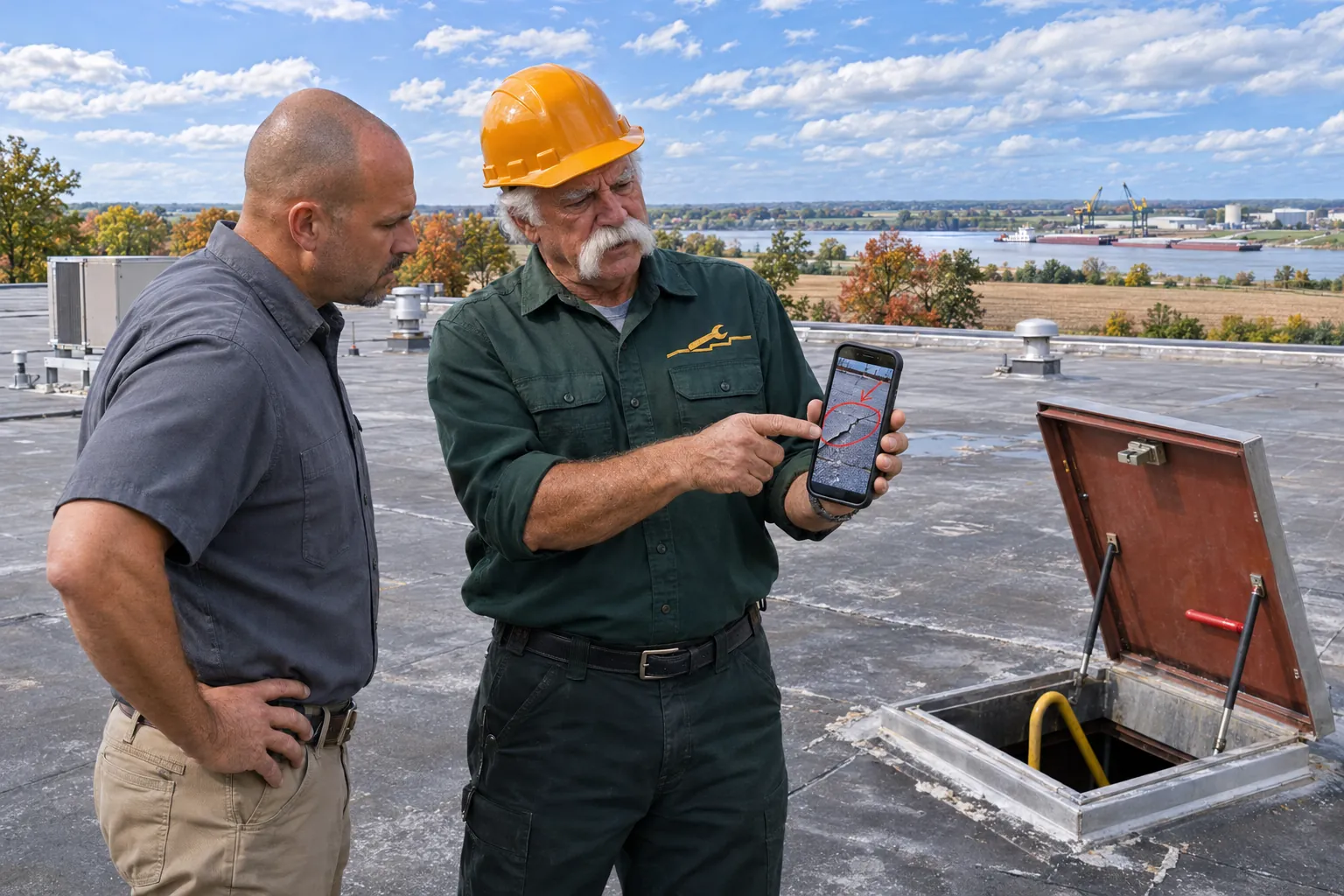
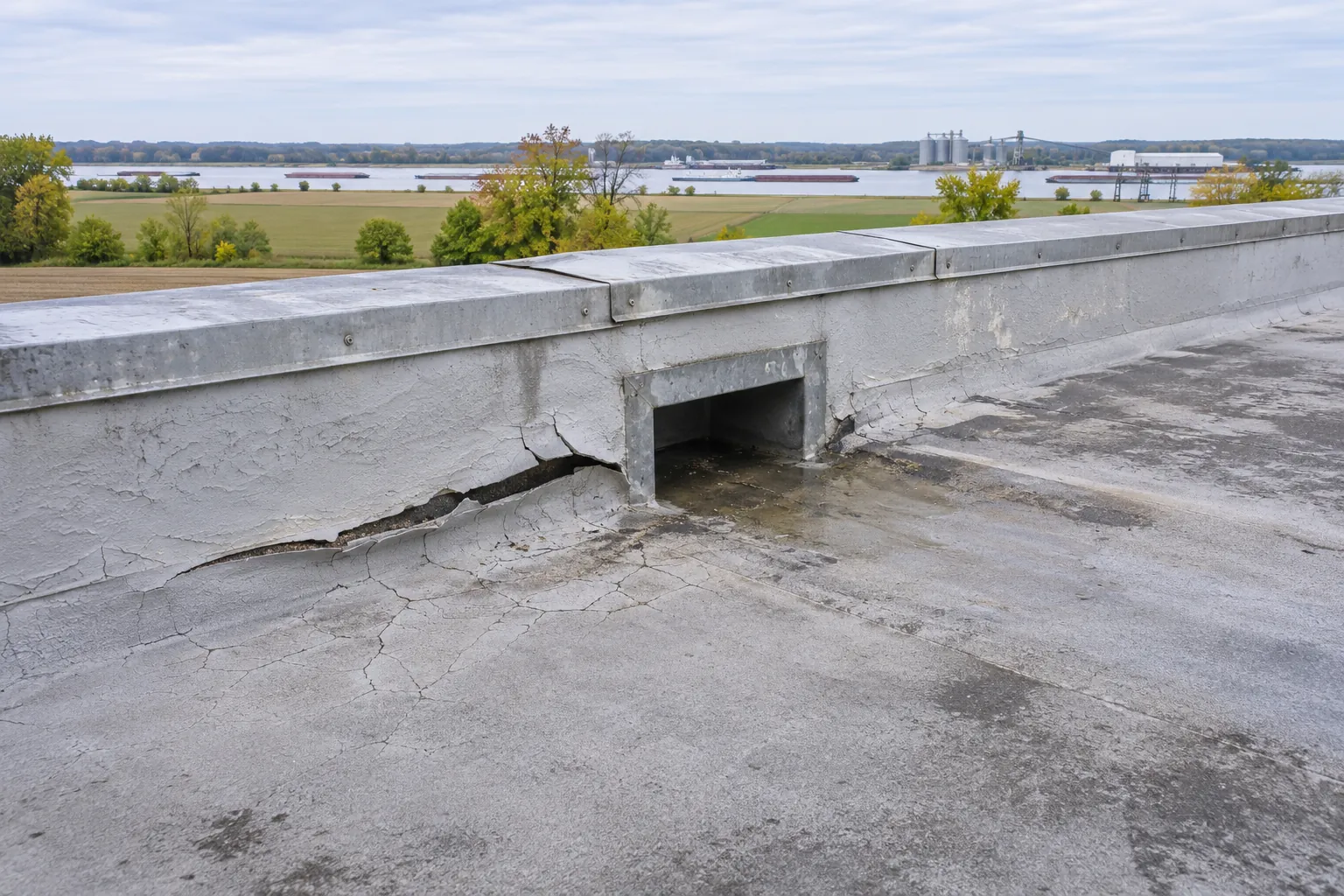
Every lap, drain, curb, and wall flashing on the low-slope field gets checked, and suspect seams are probed with a hand tool to find any edge that has let go.
Ceiling stains are located from inside and measured, then matched to the roof above, because water often runs along insulation joints before it drips.
Core cuts and a moisture meter show whether the board under a failed seam or blister is dry or needs replacing before any patch goes down.
Clean membrane is welded on TPO, taped on EPDM, or patched with matching material on modified bitumen, so each repair bonds the way the roof was built.
You receive photos of each repair and a note on any seams, blisters, or drains to watch, which helps decide between more repairs and a restoration.
Flat roofs rarely fail alone. These services cover the parts of a property a membrane repair leaves untouched.
When a ceiling stain sits far from any obvious seam, leak tracing finds the source before money goes into the wrong patch.
Leak tracing in PaducahMany properties pair a flat office roof with a steel warehouse or shop, and the metal side leaks at screws and end laps.
Metal roof repair in PaducahPlant roofs carry exhaust stacks and process fans that damage membrane in ways a standard flat repair has to plan around.
Plant roof repair in PaducahTPO seams are cleaned and rewelded with hot air, and EPDM seams are cleaned, primed, and closed with new seam tape or a cover strip.
Aged TPO needs membrane cleaner first because its chalky film blocks a weld, and stubborn sections get a new strip welded on top. Long runs of glued EPDM laps are peeled back, cleaned to bare rubber, and taped, with lap sealant at every T-joint.
Only the large, cracked, or growing ones. Blisters form when trapped moisture or air expands in the sun, under a single-ply sheet or between the plies of built-up and modified bitumen roofs.
Small intact blisters are watched on later visits, and damaged ones are cut, dried, pressed down, and patched well past the cut. A cluster in one area points to wet insulation, so a core cut decides whether the board is replaced.
Often, when the cause is a clogged strainer, a drain bowl set too high, or a local low spot. Water still standing a couple of days after rain counts as ponding.
Repairs include clearing drains and scuppers, resetting a drain bowl flush with the surface, adding tapered crickets under a new patch, or cutting a new scupper through a parapet. Sagging decks or ponding across most of the roof point to structural work.
The area is cleaned, the insulation underneath is checked for water, and a round-cornered patch of matching membrane is welded or taped so it reaches several inches past the hole.
Soft or wet board is cut out and replaced first. Since one puncture usually means more nearby, the whole work zone is searched, and walkway pads along the service route keep boots and carts off the sheet afterward.
Large areas of wet insulation, membrane shrinking away from walls and curbs, or cracking across the whole field mean repair has run its course.
Other warning signs include alligator cracking on built-up or modified bitumen, patches layered over old patches at the same seams, and spongy areas that grow after each storm. A moisture scan plus two or three core cuts settles it, and dry insulation keeps restoration possible.
Small leaks should get a temporary seal right away, even when the permanent repair waits for better weather. Hot-air welding of TPO keeps working in cold air with adjusted settings, while primers, adhesives, and seam tape have minimum application temperatures.
Frost and dew block adhesion, so winter work runs from late morning until evening dew returns, on the first mild, dry stretch.
Send the roof type, the building size, and where water shows up inside. We will walk the low-slope field and list the seams, drains, and flashing that need work.