A Stain Far From Any Seam
Water travels along deck flutes, insulation joints, or purlins before it drips, so the ceiling stain and the hole in the roof can sit many feet apart.

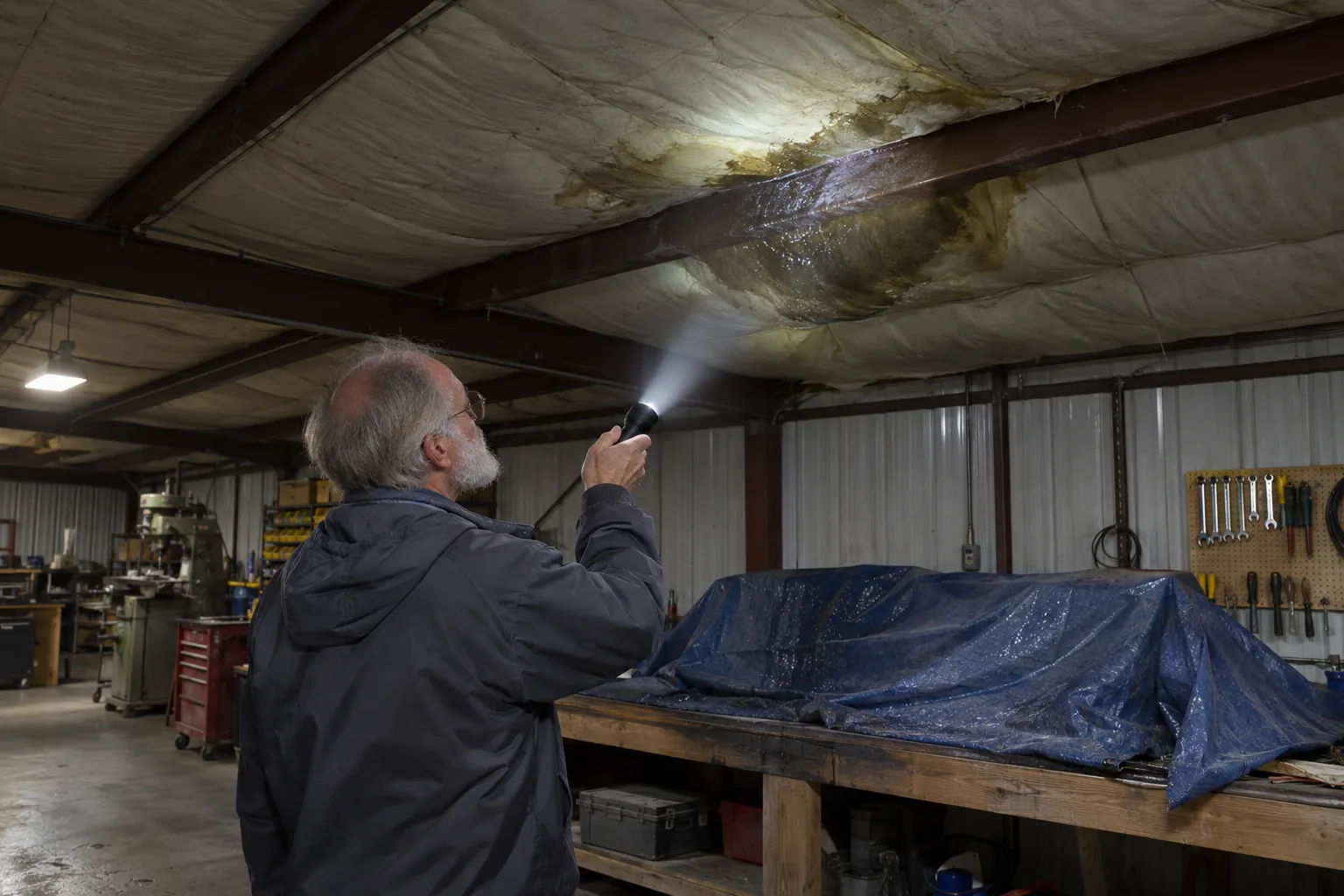
Our Paducah commercial roof leak repair work traces water from the interior stain back to the seam, curb, or fastener feeding it, then fixes that detail.
A Paducah commercial roof leak repair holds when the leak has one source. Several sources spread across the roof call for a bigger decision.
Where Leak Calls Start
Leaks show up inside long before anyone sees the cause on the roof. These six signs tell us where to start looking.
Water travels along deck flutes, insulation joints, or purlins before it drips, so the ceiling stain and the hole in the roof can sit many feet apart.
Unit curbs leak at loose counterflashing, base flashing that runs too short, and missing crickets on the uphill side that let water pond against the curb.
Filler inside the pan shrinks and pulls away from the pipe or support, opening a gap water follows straight down. Pans without a rain bonnet fail again within a few seasons.
Curb flashing, cracked domes, dried gaskets, and the laps around translucent panels in metal roofs all fail with age. The repair goes to whichever part let go.
Drips that appear with wind and stay dry in steady rain point to edge metal, coping, ridge caps, or wall flashing rather than the field of the roof.
Gutters that spill over, or downspouts that run dry in a storm, signal clogged drains and scuppers that back water under the flashing at the roof edge.
Once the source is found, the repair matches the failed detail. These four cover most of the leaks we trace.
Seams, flashings, and fasteners upslope of the stain are probed, then small sections are water-tested with a hose, starting low and moving uphill until the drip returns.
Pans are cleaned, topped with pourable sealer, and crowned to shed water, or swapped for pre-formed boots. Curbs get new counterflashing, longer base flashing, and an uphill cricket.
Flashing around the skylight curb is rebuilt and tied back into the roof membrane, and domes or gaskets that cracked or dried out are swapped as complete units.
During rain, wet-surface mastic, repair tape, or a weighted tarp keeps water off stock and ceilings. That material comes off for the permanent repair once the roof dries.
Finding the true source the first time keeps repair money on the detail that failed instead of on patches in the wrong place.
Tracing the stain back to its seam or curb means the fix lands where water enters. Guessing from the ceiling spot tends to leave the real source open.
Water entering a low-slope roof spreads through the board before it drips. Closing the source early keeps the cut-out to a short section around it.
Buckets, tarps, and moved stock only buy time. A finished repair at the pitch pan or skylight curb ends the drip over desks, shelving, and equipment.
Dates, photos, and roof locations from each visit show whether leaks cluster along the same flashings, which points to section work or a larger fix.
Call us now. A rain-day repair with wet-surface mastic or tape can slow the leak, and the permanent fix goes in once the roof surface dries.
Leak work starts inside the building and climbs to the roof. The lanes show which steps happen where.

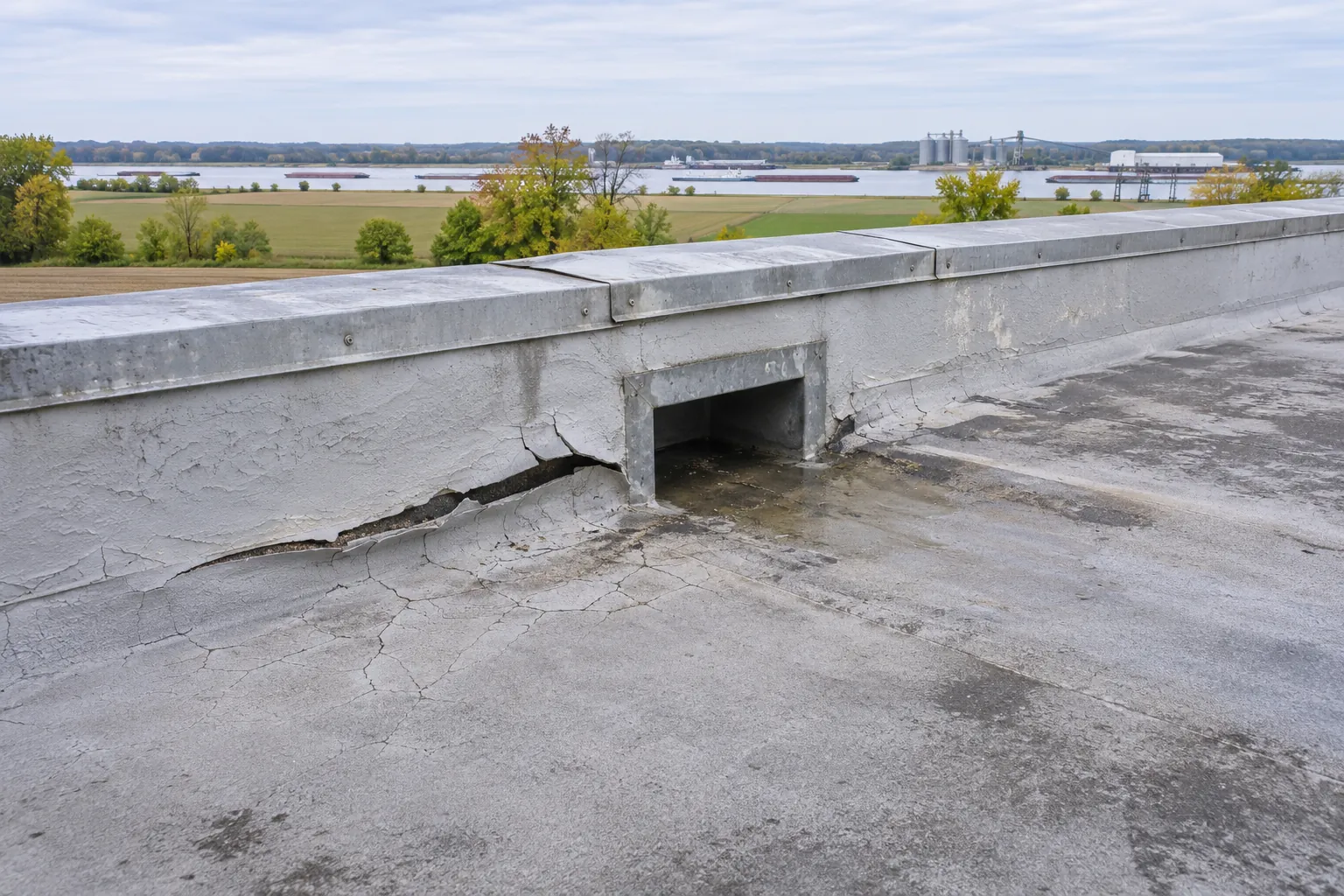
Seams, flashings, penetrations, and edges upslope of the marked spot are walked and probed, since those breaks in the surface are where commercial roofs leak most.
Inside, the stain is marked and measured from two walls so the same position can be found on the roof deck above it.
Small sections get a hose test, starting at the low point and moving uphill one feature at a time until water shows up inside again.
An infrared scan after sunset shows wet insulation spreading from the source, and that board is cut out and replaced during the repair.
Your repair record lists the roof source found, the fix made, and the date, plus photos to compare against the ceiling after the next rain.
A traced leak often points to a wider repair need. These services pick up from there.
If the source is an open TPO weld or a peeling EPDM lap, the fix is a seam repair across the whole affected run.
Flat roof repair in PaducahLeaks traced to screws or end laps on a steel roof call for fastener and lap work along the full panel run.
Metal roof repair in PaducahPlant leaks near exhaust fans or process stacks need repair materials checked against what settles on that roof.
Plant roof repair in PaducahThe search starts at the interior stain and works up to the roof, because water often travels along deck flutes, insulation joints, or purlins before it drips.
The stain is marked and measured from two walls, the matching roof area is found, and every feature upslope is probed. Small sections are then hose-tested from low to high, and an infrared scan after sunset shows wet insulation spreading from the source.
Leaks start where the roof surface is interrupted: seams, flashings, penetrations, and edges. TPO and PVC leak at seam corners, pipe boots, and unit curbs. EPDM leaks at glued laps, T-joints, and wall flashing pulled taut.
Built-up and modified bitumen roofs leak at blisters, cracked base flashing, and pitch pans, while metal roofs leak at screws, end laps, ridge caps, skylight panels, and eave trim.
Pitch pan filler shrinks and pulls away from the pipe, opening a gap that water follows straight down, and pans missing a rain bonnet or filled with the wrong material fail again quickly.
The repair cleans the pan, adds pourable sealer to the brim, and shapes a crown, or replaces it with a boot. Curbs leak at loose counterflashing, short base flashing, and missing crickets, and unit vibration loosens counterflashing screws.
Only temporarily. Rain allows wet-surface mastic, repair tape, or a weighted tarp over the source, while the permanent fix waits for a dry roof. Work in rain stays off slick metal panels and away from roof edges.
Once the surface dries, the temporary material comes off, the seam, flashing, or panel is cleaned, the matching repair goes in, and wet insulation under the leak is cut out.
The repair goes to the part that failed: curb flashing, a cracked dome, a dried gasket, or the laps around translucent panels in a metal roof.
Curb-mounted units get new base flashing tied into the membrane and fresh counterflashing at the frame. Yellowed or cracked translucent panels are swapped for the same rib profile with new lap sealant and fasteners, and safety screens protect anyone walking the roof.
Wind direction and rain intensity change which detail takes water. A leak that appears only in wind-driven rain usually starts at edge metal, coping, ridge caps, or wall flashing, while one that shows after any steady rain points to a seam, boot, or drain in the field.
Noting when each drip starts, compared with rainfall and wind, narrows the search before the roof walk.
Tell us where the stain is, how big it has grown, and when it drips. We will trace it to the roof and fix the detail that is letting water in.