Debris Punctures
Flying branches and scraps of sheet metal cut small holes in TPO and EPDM. Those openings rarely show from the ground, and water reaches the insulation through them during the next rain.

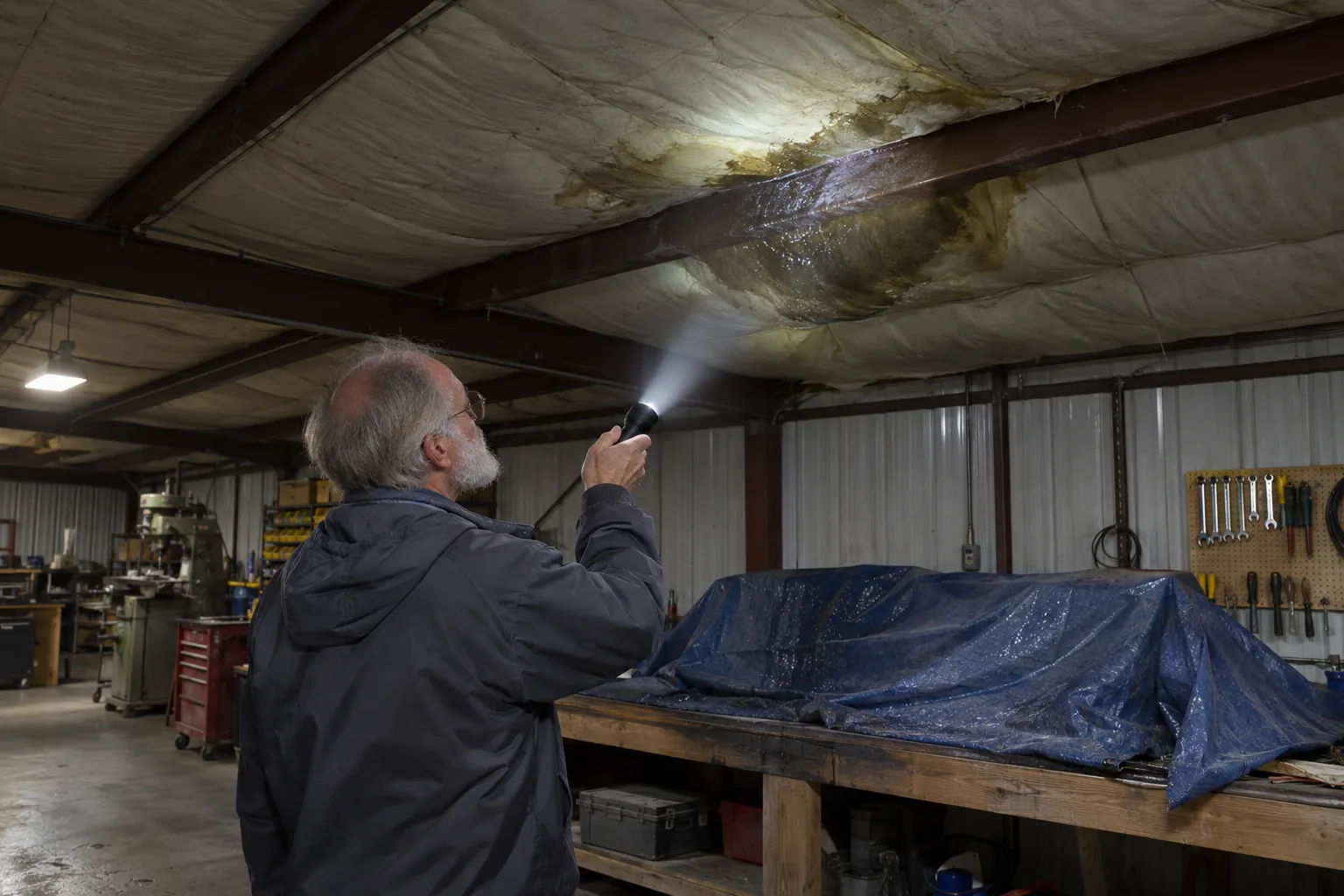
As a Mayfield commercial roof repair contractor, we check roofs after severe weather and fix debris punctures, loose edge metal, and torn gutters.
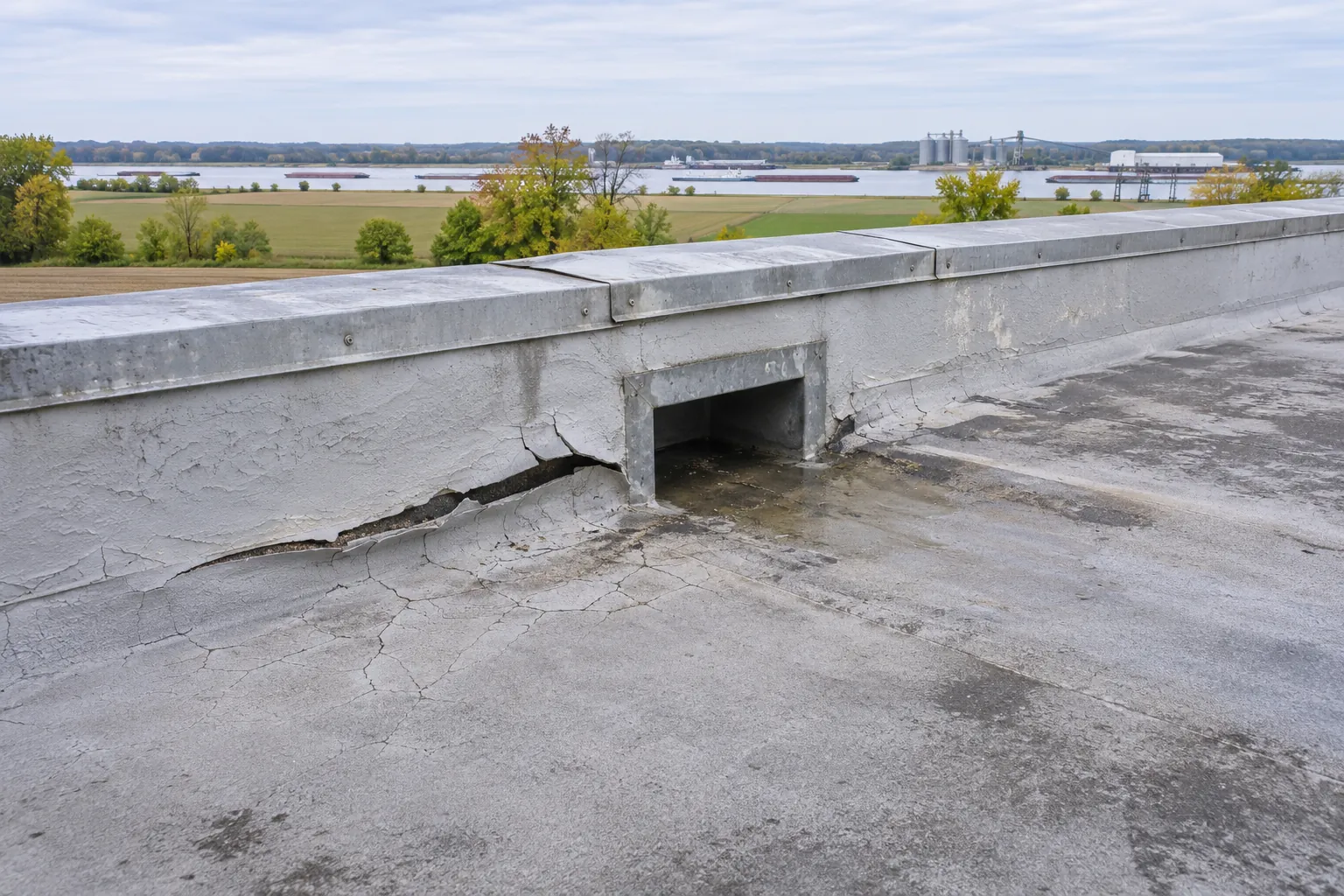
Mayfield commercial roof repair often starts the morning after a storm. Branches and sheet metal blown off neighboring buildings leave gouges in membrane and dents in panels that stay dry until the next rain, so a careful walk right after the weather finds damage the ceiling has yet to show.
The December 2021 tornado, recorded by the National Weather Service office in Paducah, showed how much harm flying debris does to roofs across Graves County. We photograph every finding before cleanup, which keeps the record clear for an insurance claim.
These are the conditions a storm walk turns up most on Mayfield shops, offices, and plants. Each one points to a specific repair.
Flying branches and scraps of sheet metal cut small holes in TPO and EPDM. Those openings rarely show from the ground, and water reaches the insulation through them during the next rain.
Wind gets under edge metal and coping caps and pries them up a little at a time. Once the edge lifts, rain drives under the membrane at the perimeter and wets the board along the wall.
Gutters pulled loose or bent by debris overflow at the eave, sending water back under the trim and into the wall. New hangers and resealed seams return the flow to the downspouts.
Access panels on rooftop units work loose or blow off in high wind. Rain then enters the unit housing and finds its way down the curb into the building below.
Hail crushes the insulation under a membrane that still looks intact. Pressing suspect spots by hand finds the soft areas that later split and leak.
Skylight domes and translucent panels crack under hail and falling limbs. A cracked dome is replaced as a unit, and the curb flashing around it is checked at the same visit.
Fixing storm damage soon after the weather passes keeps a short list of repairs from turning into a much longer one.
Dated photos taken before cleanup connect each gouge, dent, and lifted seam to a specific weather event. That record supports an insurance claim and shows exactly where the repairs went.
Sealing a puncture before the next rain keeps water out of the insulation. Wet board has to be cut out to the deck, which turns a small patch into a larger repair.
Edge metal and coping fastened back down stop the wind from peeling the perimeter further. A loose edge left through another storm can tear a long strip of membrane free.
Rehung, resealed gutters carry water to the downspouts again. That keeps overflow from soaking the eave trim and the top of the wall below it.
Storm damage lands on every kind of roof. These are the repairs Mayfield owners call about most after severe weather.
Round-cornered patches of matching TPO or EPDM go over cleaned punctures after the insulation underneath is checked for water.
Flat roof repairDented laps get resealed, loosened screws are replaced with larger ones, and torn rake or eave trim is swapped for matching profiles.
Metal roof repairStains that appear after a storm get traced from the ceiling back to the lifted seam, cracked skylight, or loose flashing feeding them.
Roof leak repairNew hangers, resealed gutter seams, cleared downspouts, and edge metal fastened at closer spacing finish the perimeter after a Graves County storm.
Call before cleanup starts. We photograph the roof as the storm left it and set temporary repairs on open punctures until a dry day allows the permanent fix.
Storm visits split time between the roof and the yard around the building, where blown debris often shows where to look first.
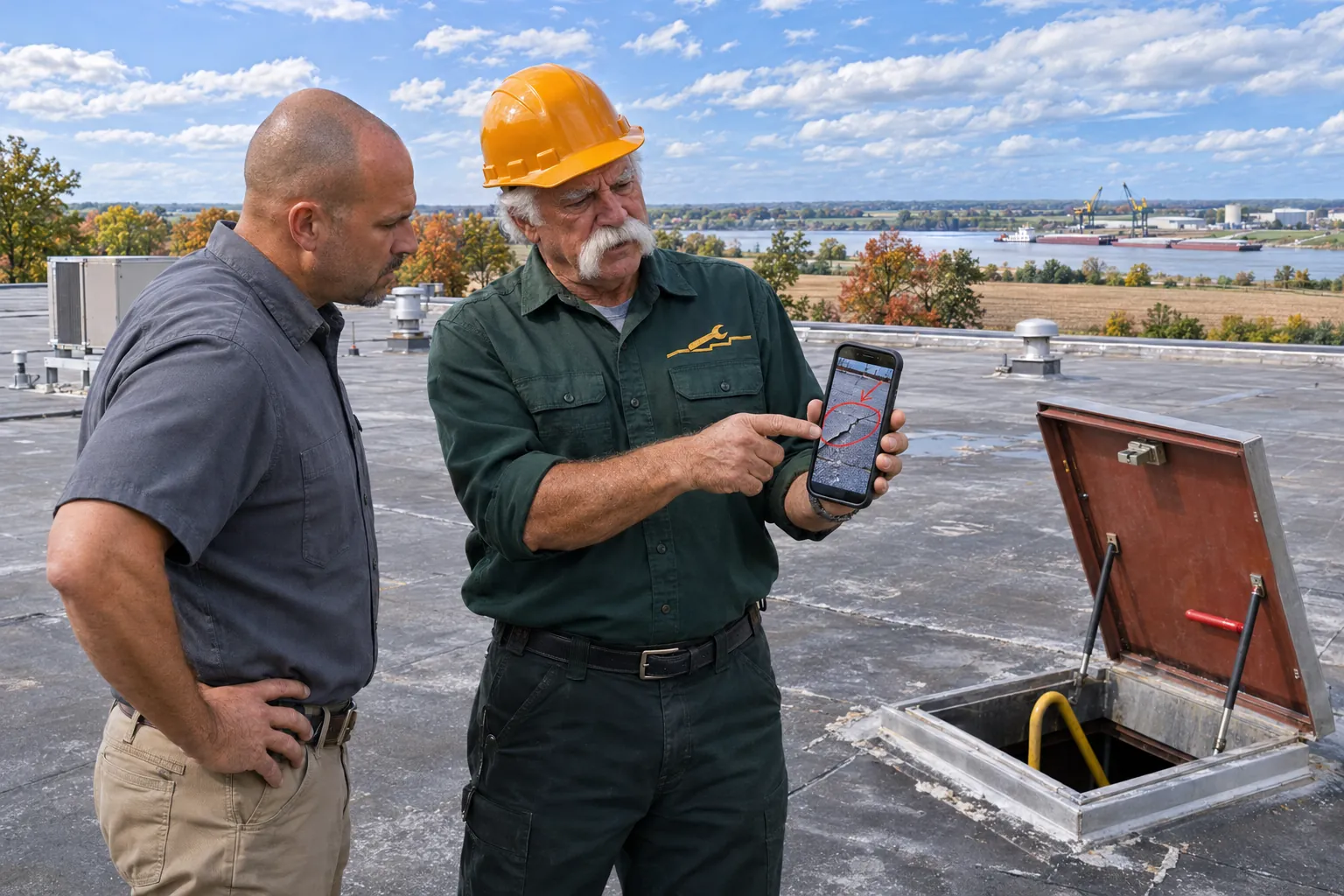
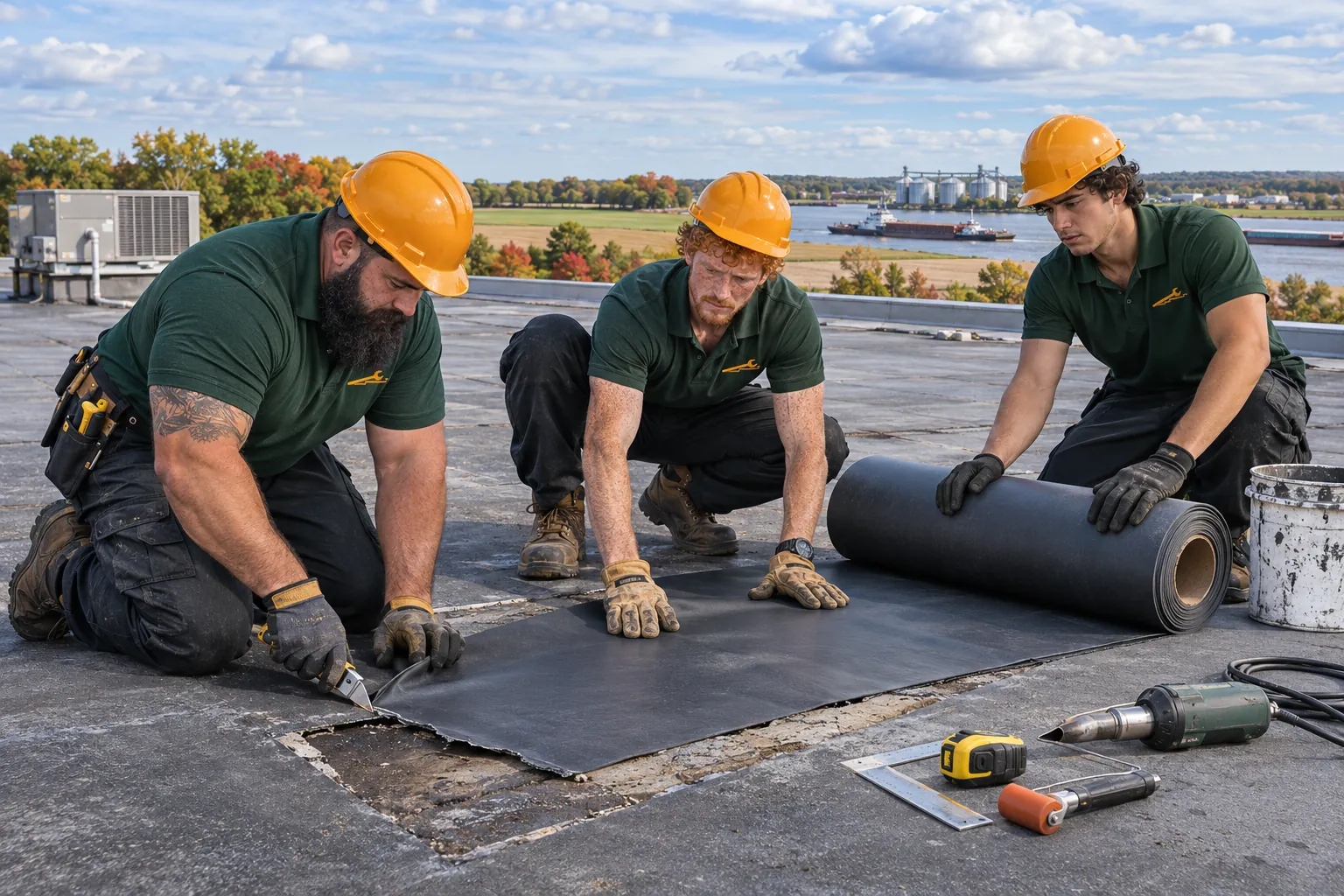
We walk the full roof after the storm, pressing suspect spots for crushed insulation and checking edge metal, coping, skylights, and every unit panel for lift or impact damage.
Debris on the ground, bent gutters, and damage on the walls get photographed with the date first, since moving them erases the record an adjuster will want to see.
Holes and gouges get a temporary seal right away if rain is coming. The permanent patch follows on a clean, dry surface with membrane that matches the roof.
Lifted edge metal, coping caps, and torn trim are fastened back down with new screws at closer spacing, so the next strong wind has less to grab.
New hangers and resealed gutter seams go in last, and you get a dated list of every repair along with any items the storm left for a later visit.
Commercial Roof Repair
Need roof work outside Mayfield? Call us or send us a message. We repair commercial roofs in Paducah, Murray, Benton, Calvert City, Eddyville, and the smaller towns listed below.
McCracken County
Also served
Marshall County
Plant roofs repaired around entry permits and planned outages.
Calvert City Commercial Roof RepairAlso served
Calloway County
Steel shops where morning drips often turn out to be condensation.
Murray Commercial Roof RepairLyon County
Also served
Livingston County
Also served
Ballard County
Also served
Caldwell County
Also served
Check for debris punctures, lifted edge metal, torn gutters, and loose rooftop unit panels, and photograph each item before anything gets cleaned up. Branches and sheet metal from nearby buildings leave gouges that stay dry until the next rain.
The December 2021 tornado, on record with the National Weather Service in Paducah, showed how much damage flying debris does across Graves County.
Repairs that replace roof sections inside city limits go to the City of Mayfield's building inspector, who is listed on the state's Graves County contact sheet. A patch over a puncture or a resealed seam sits at the light end, while new decking or swapped panel runs lean toward work that needs a permit.
Yes. Hail bruises the insulation under membrane that shows no mark on top, and a dented end lap on a metal roof can open slowly over several weeks. Pressing suspect areas by hand and checking the laps closely finds that damage before it shows up as a stain inside.
Only the permanent repair needs to wait. Once every finding is photographed with the date, open punctures and lifted seams get a temporary seal so rain stays out of the insulation, and the permanent work follows after the adjuster has seen the roof, using the same photos as the record.
Rake and eave trim, ridge caps, panel laps, and the screws along the edges get the closest look, since wind works on those first. Loose trim is refastened at closer spacing, crumbled ridge closures are replaced, and torn pieces are swapped for matching profiles before the next storm lifts them farther.
Send us the address and what the storm left behind. We will walk the roof, photograph the damage, and list each repair.