Cracked Screw Washers
Dried-out rubber washers under exposed fasteners cause more drips than anything else on a screw-down roof. The fix is a new screw with a fresh sealing washer along the whole panel run.

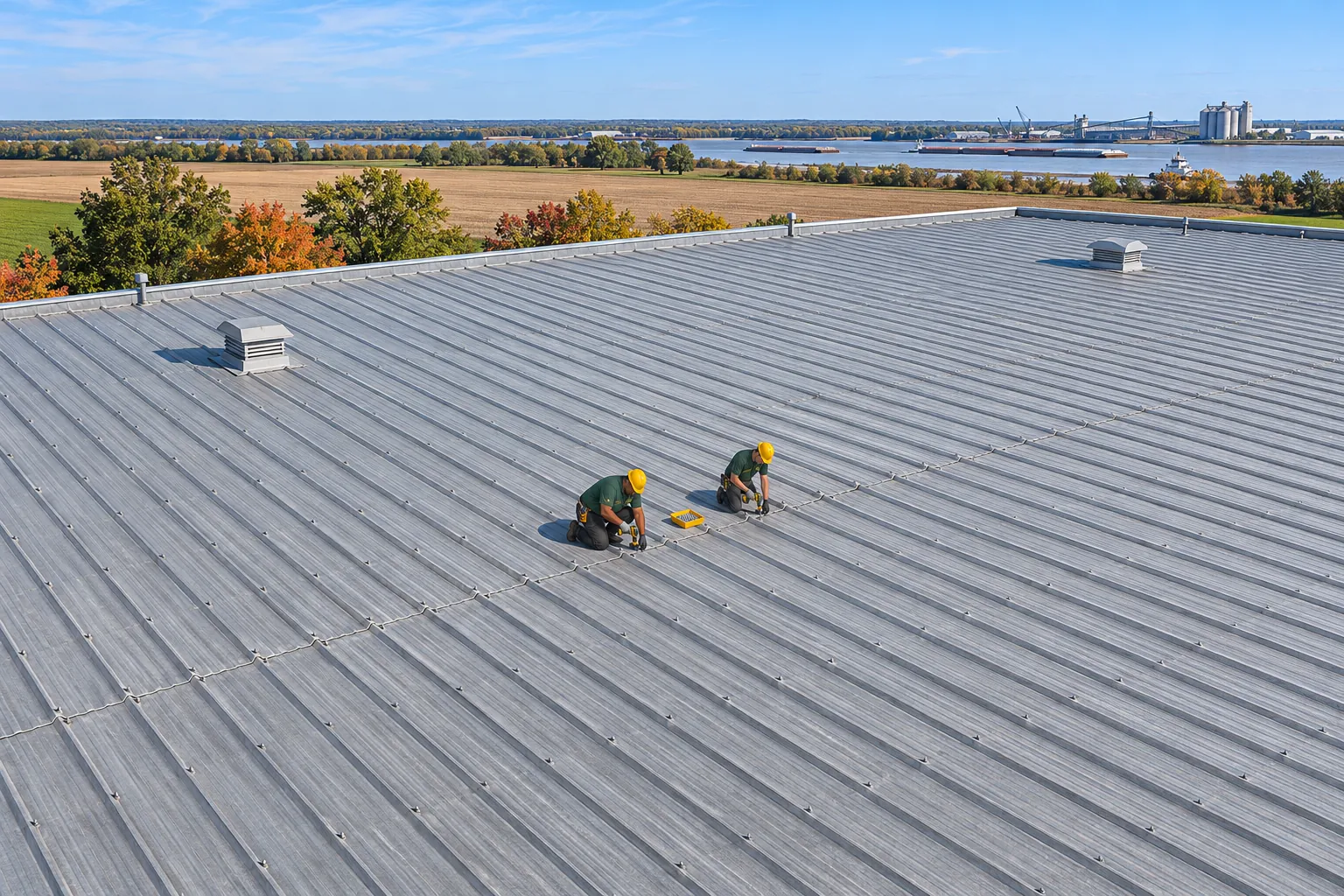
Our Paducah commercial metal roof repair work covers R-panel and standing seam roofs: loose screws, leaking laps, rusted panels, gutters, ridge caps, and trim.
Every Paducah commercial metal roof repair begins with how deep the rust runs and how many fasteners have worked loose. A look at the panel undersides from inside settles most of it.
Where Metal Roofs Start
Steel roofs leak where panels are joined, fastened, or trimmed. These six spots cover most of the metal building leaks we find.
Dried-out rubber washers under exposed fasteners cause more drips than anything else on a screw-down roof. The fix is a new screw with a fresh sealing washer along the whole panel run.
Daily heating and cooling makes steel panels grow and shrink, which slowly backs screws out and widens their holes. A slightly larger replacement screw grips fresh metal around a wallowed hole.
Butyl tape between overlapping panels dries out, or the fasteners through the lap loosen, and water creeps uphill between the sheets. Low-pitch roofs show this more because water moves slowly across the joint.
Panel ends at the eaves and the steel inside end laps stay wet the longest. Surface rust there gets brushed and primed, while thinned or perforated steel needs new sections.
Clogged gutters on metal buildings push water back under the eave trim and into the wall. Bent or missing hangers let the gutter sag and open its seams and end caps.
Foam closures under the ridge cap crumble with age, letting wind-driven rain and birds into the building. New closures and fresh sealant tape under the cap close that gap.
Metal repairs rely on fasteners, sealant tape, and patch panels that match the rib profile. The right option follows what the inspection finds at each lap and screw line.
Backed-out or stripped screws come out, and slightly larger screws with new washers go in. Overdriven screws that crushed their washers are replaced along with the rest of the run.
Light repairs reseal the lap edge and swap loose stitch screws. Heavier ones cover the lap with reinforced seam tape set in butyl, or open it, clean it, and set new butyl tape.
Firm steel with surface rust is wire brushed, primed, and its fasteners sealed. Pinholes get reinforced fabric, and holes larger than a coin get a patch panel sealed and stitched in.
Gutter seams and end caps are resealed, hangers replaced, and downspouts cleared. Loose rake and eave trim is refastened at closer spacing, and torn pieces are swapped for matching profiles.
Steel roofs reward early attention. A repair at the first drip keeps the panel, the purlin under it, and the stock below out of the water.
Catching rust while it sits on the surface means a brush, primer, and sealed fasteners. Waiting lets it thin the steel until the panel section has to be cut out.
Replacing screws along the full affected panel run, instead of only the one over the stain, stops the next leak in the same row before next season.
Loose rake and eave trim refastened at tighter spacing gives storms less to lift, and torn trim swapped before the next storm keeps panel edges covered.
Gutters that drain properly keep overflow from running behind the eave trim into the wall cavity, where it wets insulation and stored goods.
That pattern points to failed washers across a whole panel run. Schedule a visit and we will check every fastener in that row and the rows beside it.
Metal roof visits split time between the panels outside and the purlins, insulation, and stains inside the building.
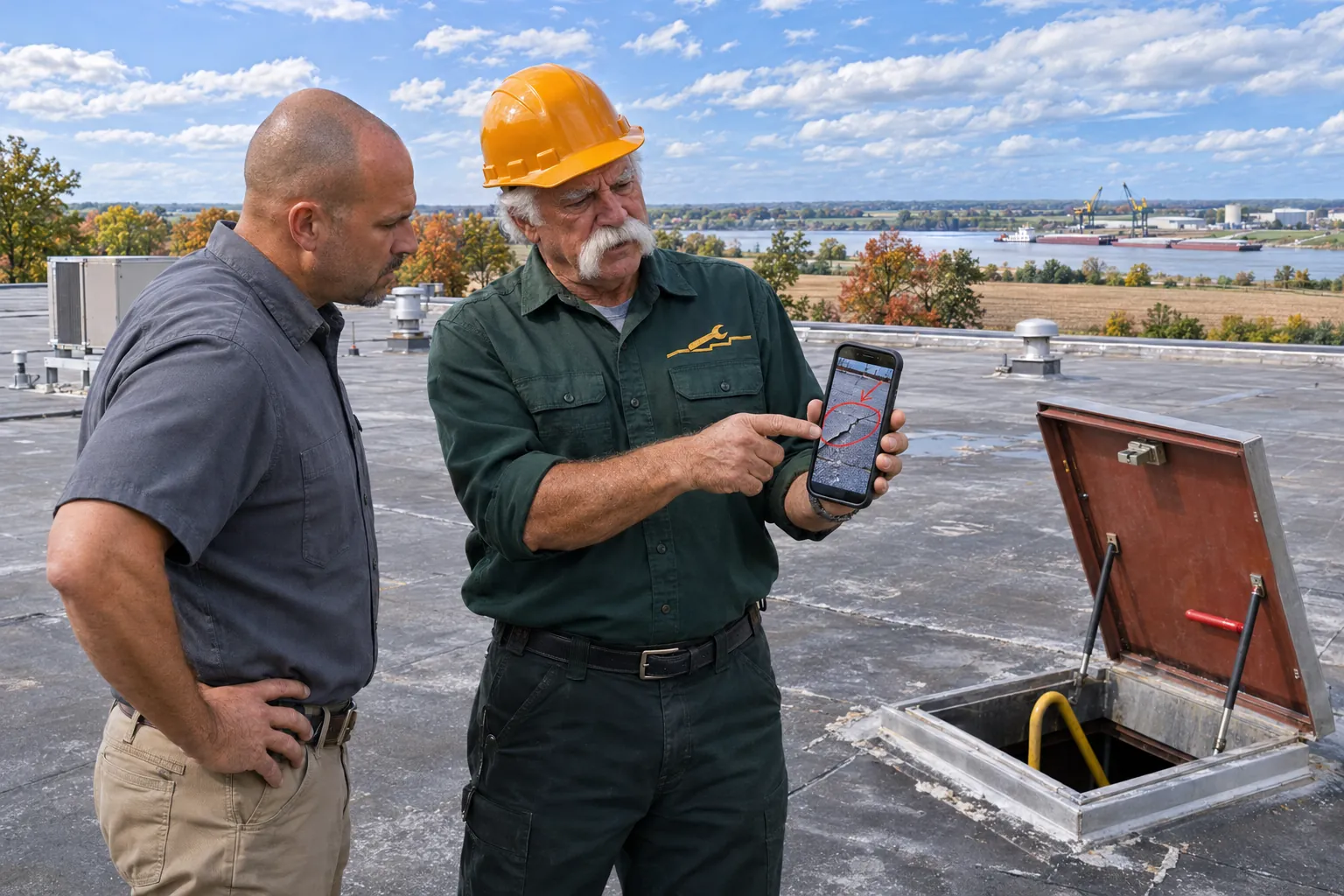
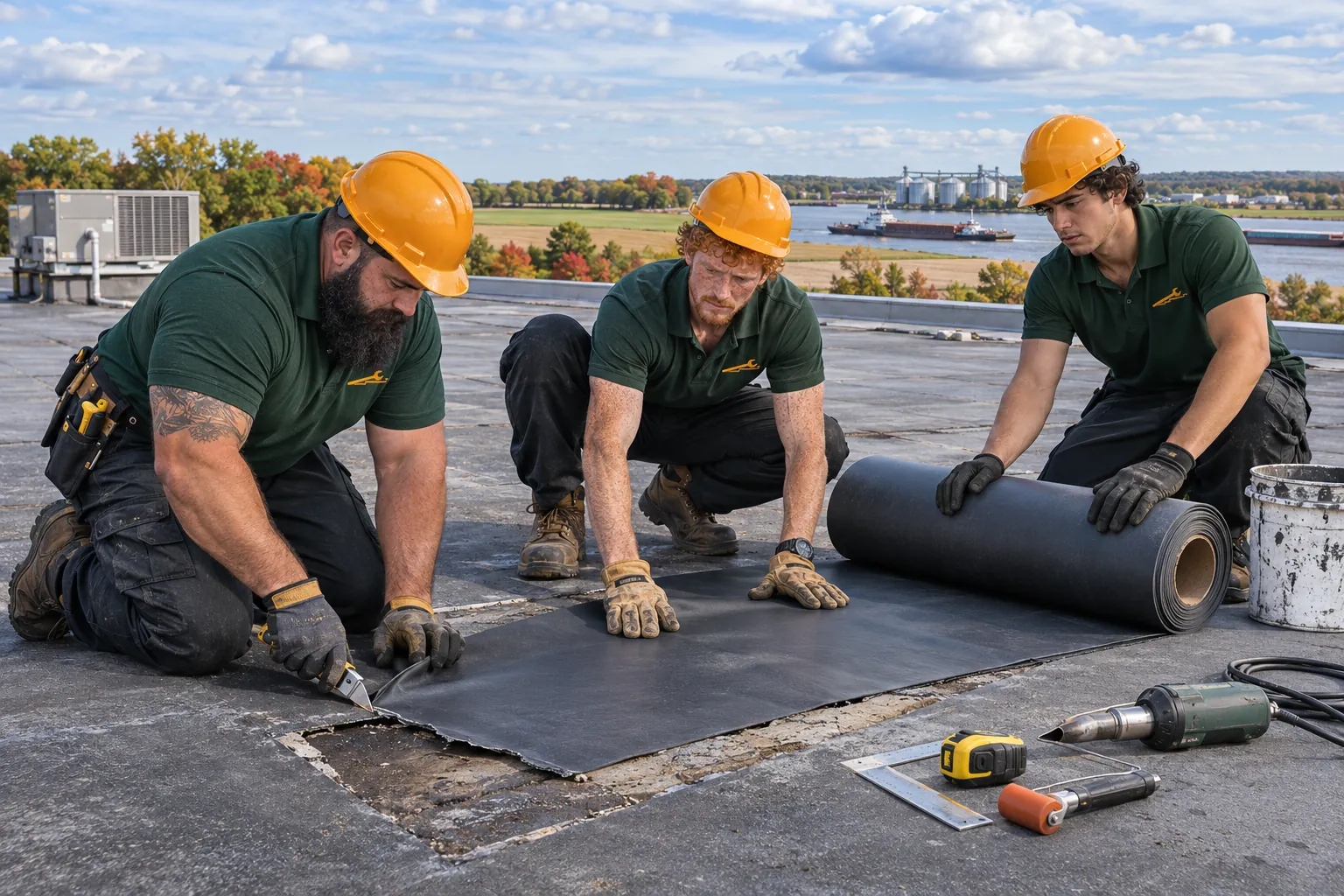
Each screw line, end lap, side lap, ridge cap, and gutter run gets walked, staying on the purlin lines to keep from denting panels underfoot.
From inside, the undersides of the panels show how deep rust runs along the purlins and whether a drip comes from a leak or from condensation.
Failed screws are replaced across the affected runs, and leaking laps are resealed or opened and retaped with butyl, working from the low edge uphill.
Rusted spots get primer or reinforced fabric, and thin or perforated steel gets patch panels or new sections of the same rib profile and metal.
Gutters, hangers, and downspouts are checked from the ground and a ladder so overflow stops running back behind the trim and into the walls.
Steel buildings often share a property with low-slope and plant roofs. These services handle the rest of the property.
An office or showroom with a membrane roof attached to the metal building needs welded or taped seam repairs instead of fasteners.
Flat roof repair in PaducahWater that travels along purlins can drip far from its source, and leak tracing pins down the lap or screw before panels are opened.
Leak tracing in PaducahAcid or caustic vapors from process equipment etch steel panels and corrode fasteners, which calls for materials rated for that exposure.
Plant roof repair in PaducahBacked-out or stripped screws are pulled and replaced with slightly larger screws and new sealing washers, and loose screws that are still intact get reseated. Cracked, dried-out washers cause most drips on exposed-fastener roofs.
Since daily heat movement works every screw loose over time, the repair covers the whole affected panel run, and overdriven screws that crushed their washers are replaced too.
Yes, while the rust sits on the surface or is limited to small holes. Firm steel with surface rust is brushed, primed, and its fasteners sealed.
Pinholes get reinforced fabric in a compatible coating, and holes larger than a coin get a matching patch panel. Steel that has thinned at the eaves or end laps needs those sections replaced, and checking the panel undersides shows how far the rust runs.
End laps are resealed, taped over, or opened and rebuilt with fresh butyl tape, and side laps get new stitch screws at closer spacing.
End laps leak when the butyl between panels dries out or the screws through the lap loosen, letting water creep uphill. Low-pitch metal roofs leak at end laps more than steep ones, because water moves slowly across the joint.
Metal repairs rely on fasteners, sealant tape, and patch panels matched to the rib profile, while membrane repairs bond new material with heat, tape, or adhesive.
A hole in steel gets a patch panel or reinforced fabric, an open joint gets stitch screws and lap sealant, and a leaking pipe gets a new boot sealed to the panel flat. Mismatched metals fail early, so steel patches stay off aluminum panels.
Gutters are resealed at the seams and end caps, given new hangers, and cleared at the downspouts. Ridge caps get new foam closures and sealant tape where old closures crumbled and let in rain and birds.
Wind-loosened rake and eave trim is refastened at closer spacing, and torn pieces are replaced with matching profiles before the next storm lifts them farther.
Condensation drips across a wide area on cool mornings, even without rain, while a leak drips at one spot during or after rain. Bare steel over an uninsulated space shows condensation the most.
Resealing screws and laps stops leaks and leaves condensation untouched, since that water forms on the underside of the panels and calls for insulation, a vapor retarder, or ventilation.
Tell us the panel type, roughly where the drips land, and how old the screws are. We will check the fastener rows, laps, and gutters and list the repairs by priority.