Packed Roof Drains
Leaves and seed pods mat over strainers until rain sits on the roof around the drain bowl, right where membrane flashing meets the drain.

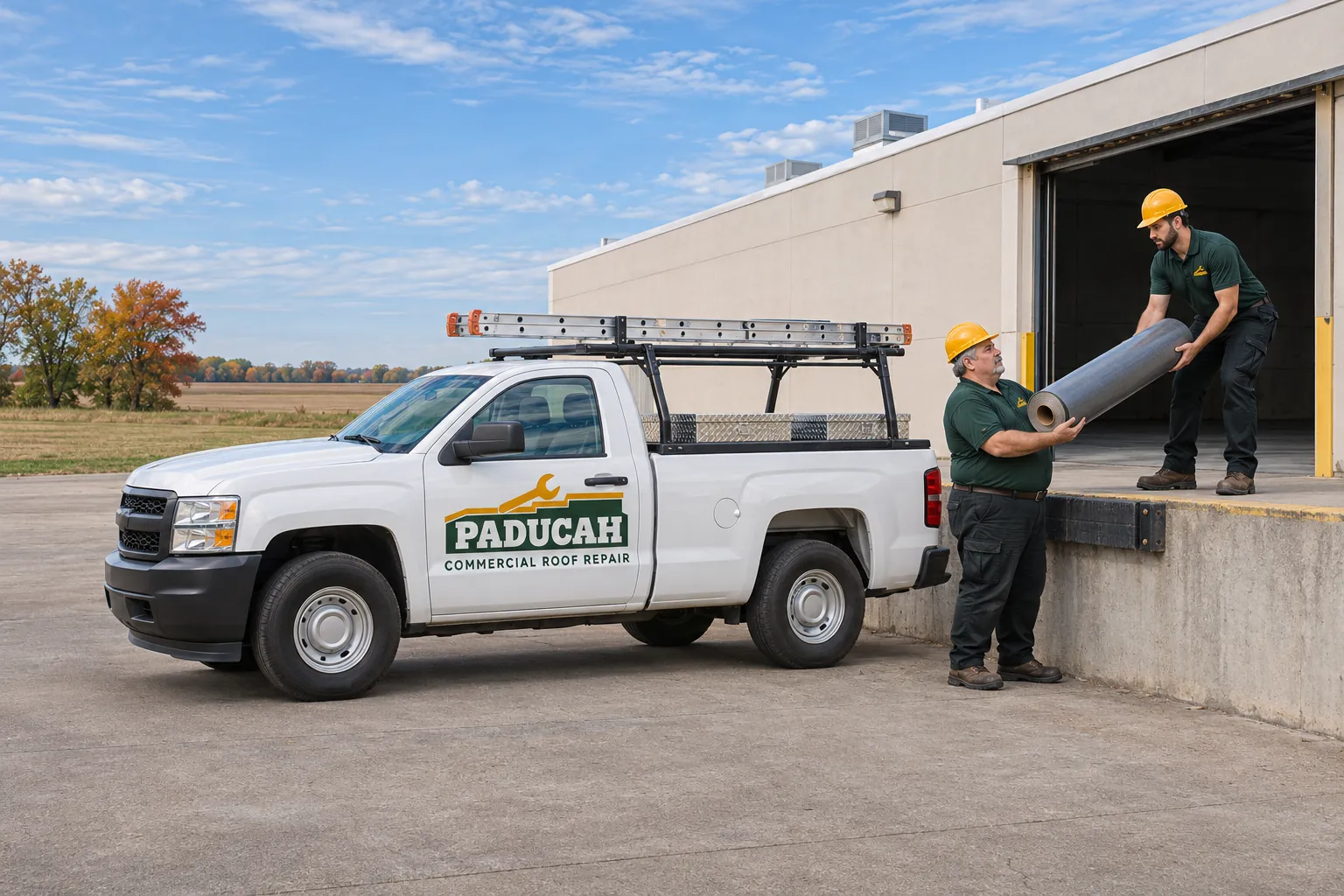
Our Eddyville commercial roof repair work clears drains, scuppers, and gutters packed with lakeside debris and reseals the laps and flashing that leaked when water backed up.
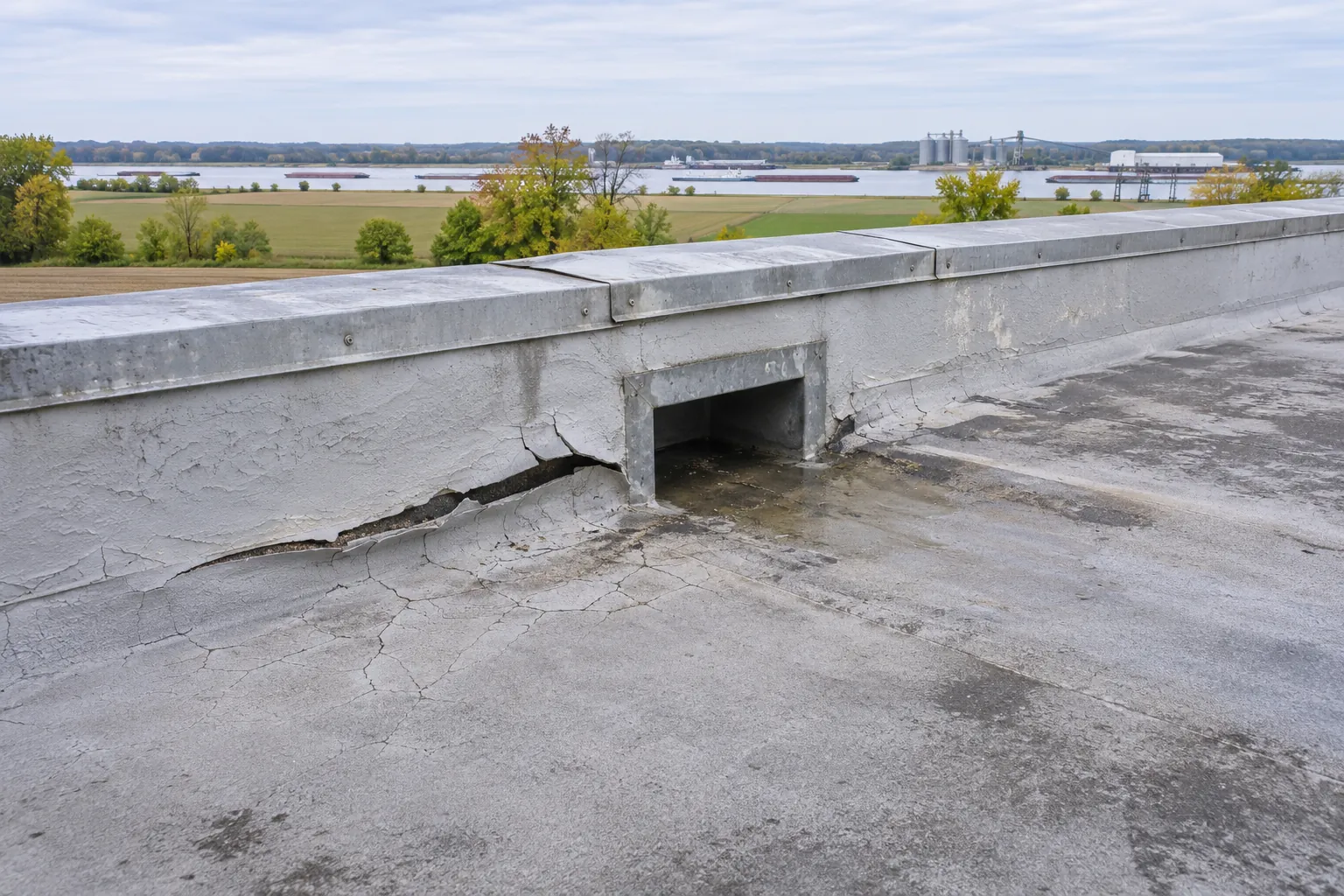
Eddyville commercial roof repair is mostly a drainage problem. Trees around Eddyville and Lake Barkley drop leaves, seed pods, and twigs onto commercial roofs, and that debris collects in roof drains, scuppers, and gutters until water backs up.
Backed-up water then finds its way under flashing and through end laps at the eaves. Fall brings the heaviest clogs, and spring storms bring branches down too, so drains that were clear in summer fill up again by late fall.
Blocked drainage causes most of the leaks traced on Eddyville roofs. These six conditions show up again and again.
Leaves and seed pods mat over strainers until rain sits on the roof around the drain bowl, right where membrane flashing meets the drain.
Full gutters spill water back over the edge and under the eave trim. On metal buildings that water reaches the wall and the end laps at the eaves.
Twigs wedged in a scupper back water up against the parapet, where it finds gaps at the box seams and the wall flashing.
Overflow water creeps uphill through end laps whose butyl tape has dried. The drip shows up just inside the wall line during heavy rain.
Water still standing a couple of days after rain counts as ponding. A clogged strainer is the most common cause, and clearing it is the first repair.
Spring storms bring down branches that gouge membrane and dent panel laps. Those gouges stay dry until the next rain finds them.
Clearing and repairing drainage protects the rest of the roof. These are the gains Eddyville owners see from a timely fix.
Clear strainers and gutters move rain off the roof and away from the walls, ending the backup that pushes water under flashing.
Resealed end laps and gutter seams close the paths overflow water used to reach the inside of the building.
Draining ponded water keeps extra load and constant wetting off the membrane and the deck beneath low spots.
Gutter guards and reset strainers cut the amount of debris that sticks each fall, so seasonal cleanouts stay quick.
Drainage repairs come first on most Eddyville roofs, followed by the leaks the overflow caused. These four options cover the usual work.
Strainers are cleared and reset, missing clamping ring bolts replaced, and drain bowls set flush with the roof surface.
Flat roof repairSeams and end caps are resealed, bent hangers replaced, downspouts cleared, and guards added under overhanging trees.
Metal roof repairStains that appear only in heavy rain are traced to the lap, scupper seam, or flashing that took water during the backup.
Roof leak repairRusted scupper boxes are replaced and resealed where they meet the parapet, and blocked overflow openings are cleared.
Overflow during rain means something upstream is blocked. Call us, and we will clear the drain path and check the laps it soaked.
Drainage work moves from the ground to the roof and back. Each step sits in the lane where it is done.
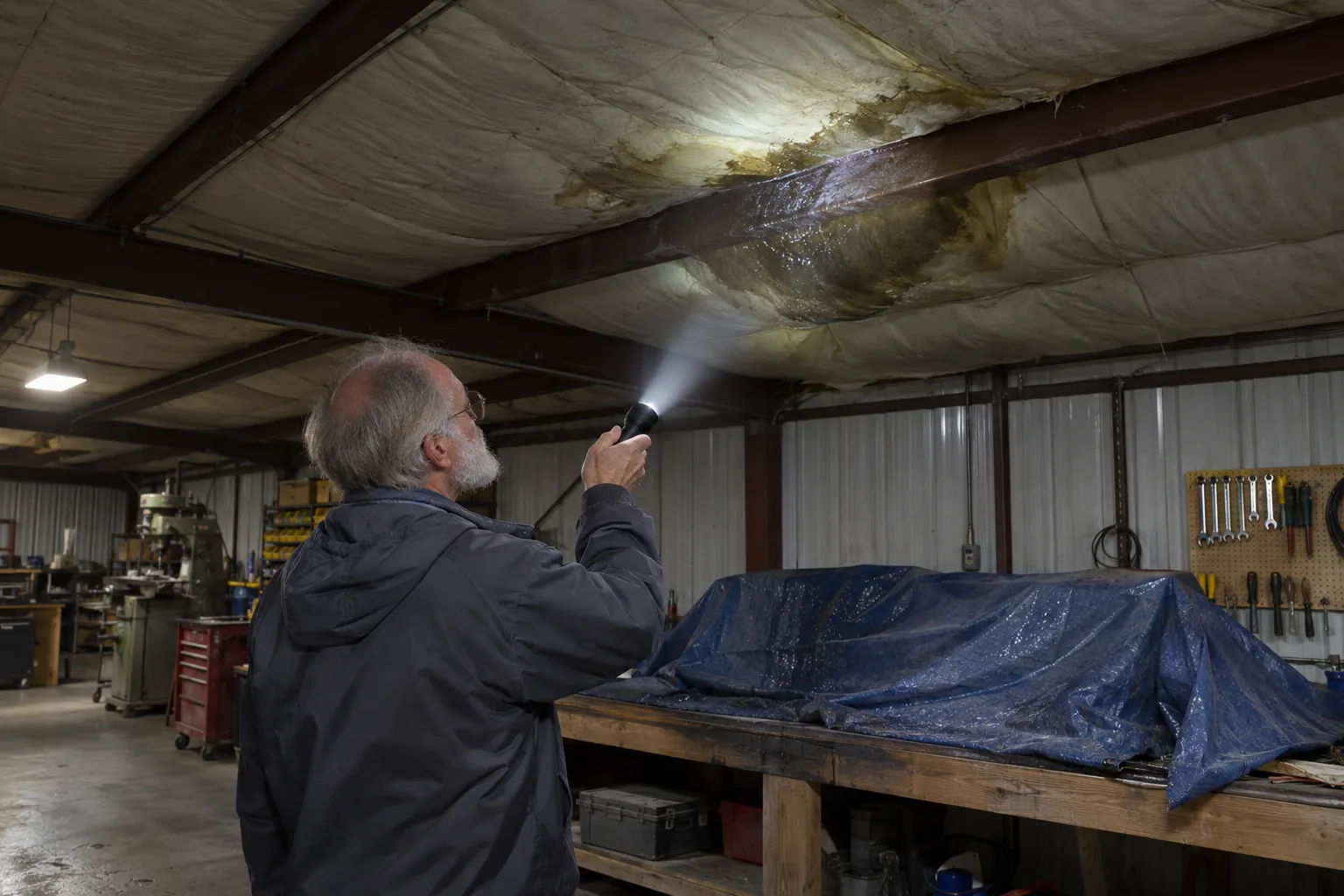
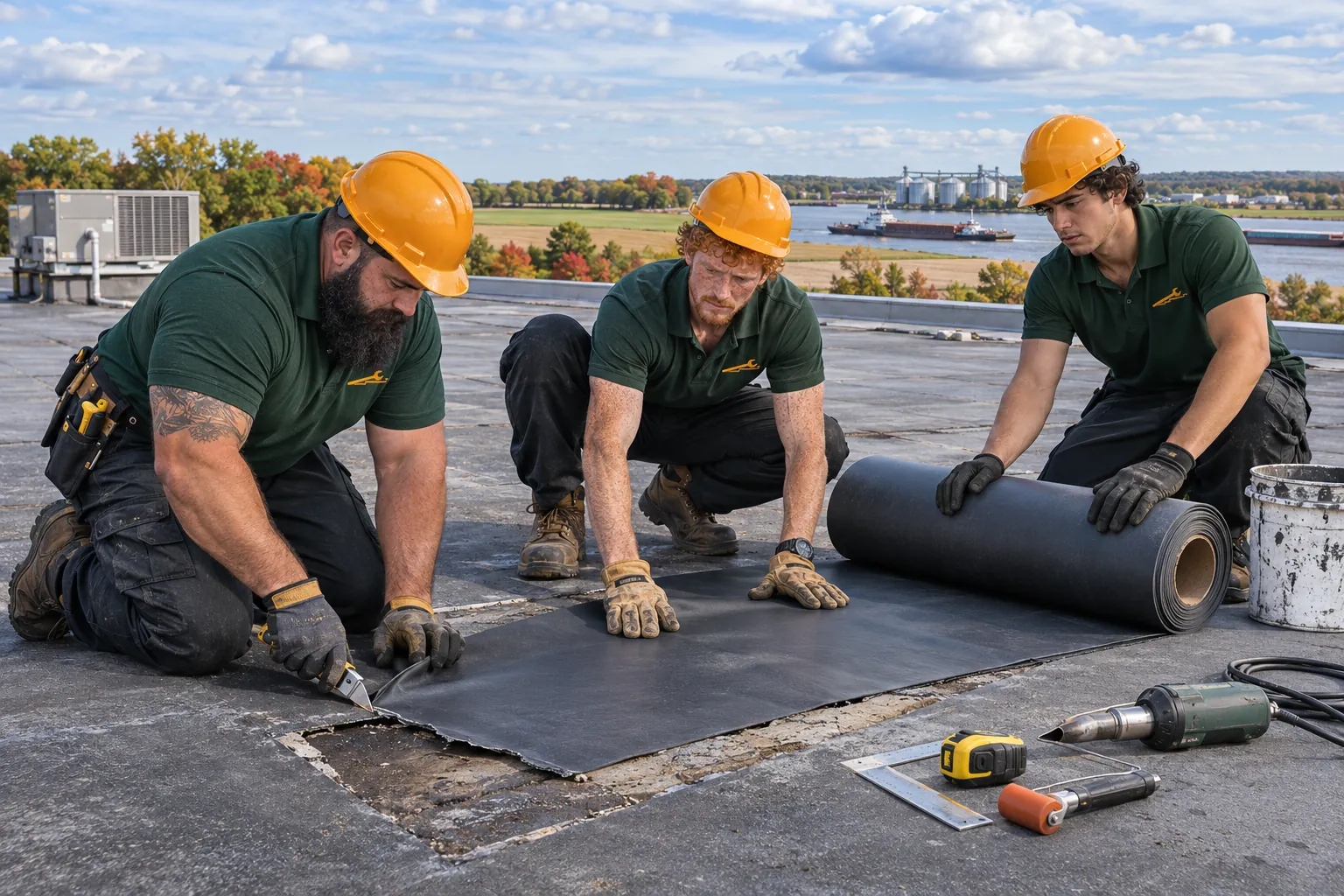
We check every drain, scupper, and gutter outlet for debris, then look at the flashing and end laps nearest each blocked point for signs of backed-up water.
From the ground, gutters that overflow or downspouts that run dry during a storm point to the clogs, and stains inside show where the overflow got in.
Debris comes out of strainers, scuppers, and gutters, strainers are reset, and loose clamping rings get new bolts so water goes down the pipe.
End laps and flashing that leaked during the backup are cleaned and resealed, and gutter seams and end caps get fresh sealant.
Gutter guards go in where trees overhang, and you get a note on timing fall cleanouts before the leaves pile up again.
Commercial Roof Repair
Building outside Eddyville? Call us or send us a message. We repair commercial roofs in Paducah, Mayfield, Murray, Benton, Calvert City, Kuttawa, and the other listed towns.
McCracken County
Also served
Marshall County
Also served
Graves County
Calloway County
Lyon County
Also served
Livingston County
Also served
Ballard County
Also served
Caldwell County
Also served
Trees around Eddyville and Lake Barkley drop leaves, seed pods, and twigs that collect in drains, scuppers, and gutters until water backs up and slips under flashing and through end laps at the eaves. Fall brings the most clogs.
Repairs include clearing and resetting strainers, adding gutter guards, and resealing laps that leaked. Section replacements go to the Lyon County building inspector named on the state contact sheet.
Watch the roof edge during a storm. Gutters that overflow or downspouts that stay dry point to a clog upstream, and a stain that appears only in heavy rain near an outside wall fits the pattern. A roof check then confirms which drain or scupper is blocked.
Often, yes. When the cause is a clogged strainer, a drain bowl set too high, or a local low spot, clearing the drain, resetting the bowl, or adding a tapered cricket under a membrane patch takes care of it. Ponding across most of the roof points toward structural work.
They cut down how much debris reaches the gutter, which keeps overflow from backing water under the eave trim. Guards still need an occasional look, especially after fall leaf drop and spring storms, so plan a check on them during seasonal roof visits.
Protect the interior and keep a short log. Buckets and tarps over stock limit the damage, and noting when drips start compared with rainfall helps the repair. From the ground, check whether gutters overflow or downspouts run dry, since those clues point to the blocked drain before anyone climbs up.
Tell us which drains or gutters overflow when it rains. We will clear the path and fix the leaks it caused.