Residue Film On Membrane
Process residue settles on the roof and blocks adhesion, so seams and patches near the source let go first. Cleaning to bare membrane is the first part of every repair there.

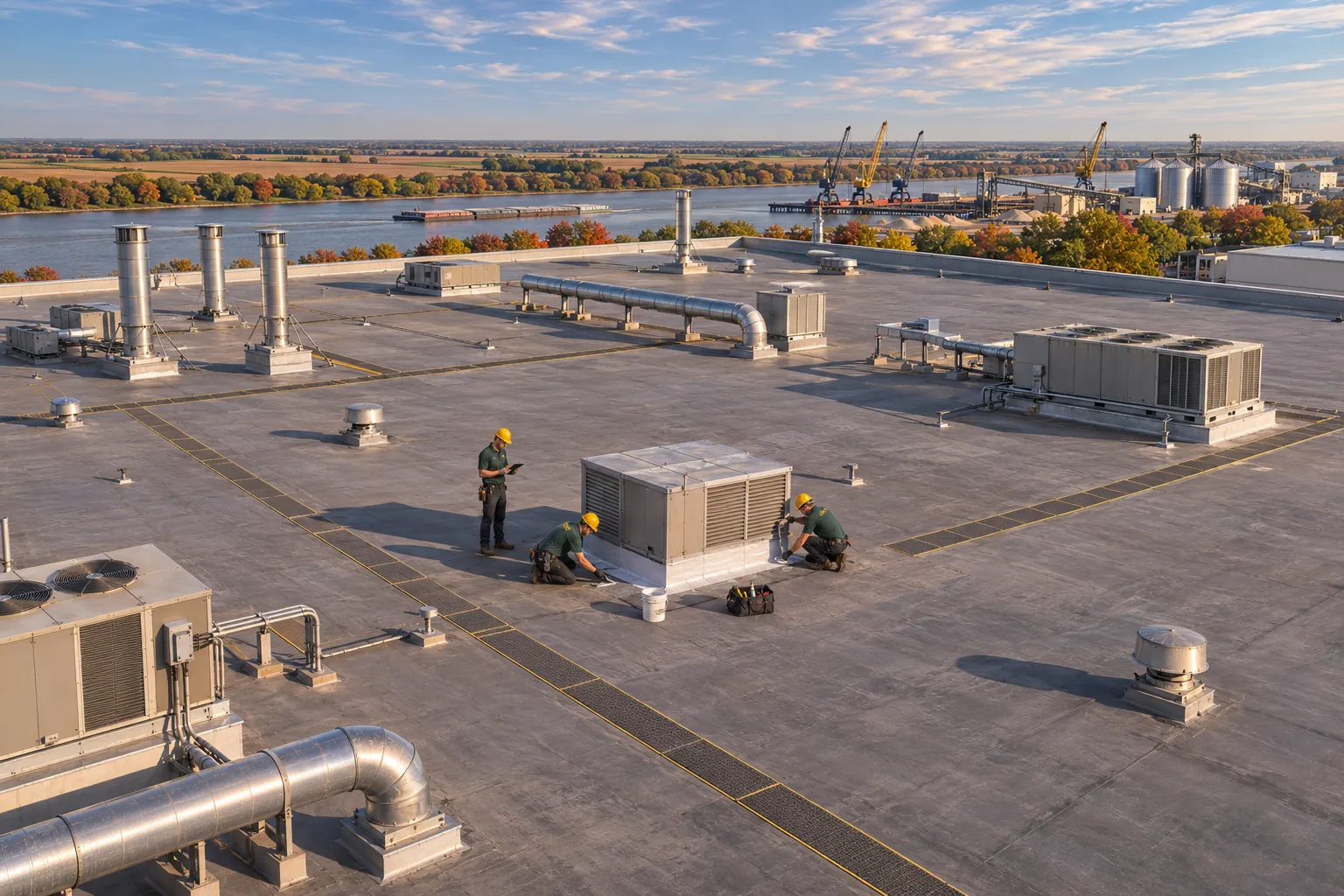
Calvert City commercial roof repair on plant roofs starts with cleaning, since process residue on the membrane keeps patches, tape, and welds from bonding.
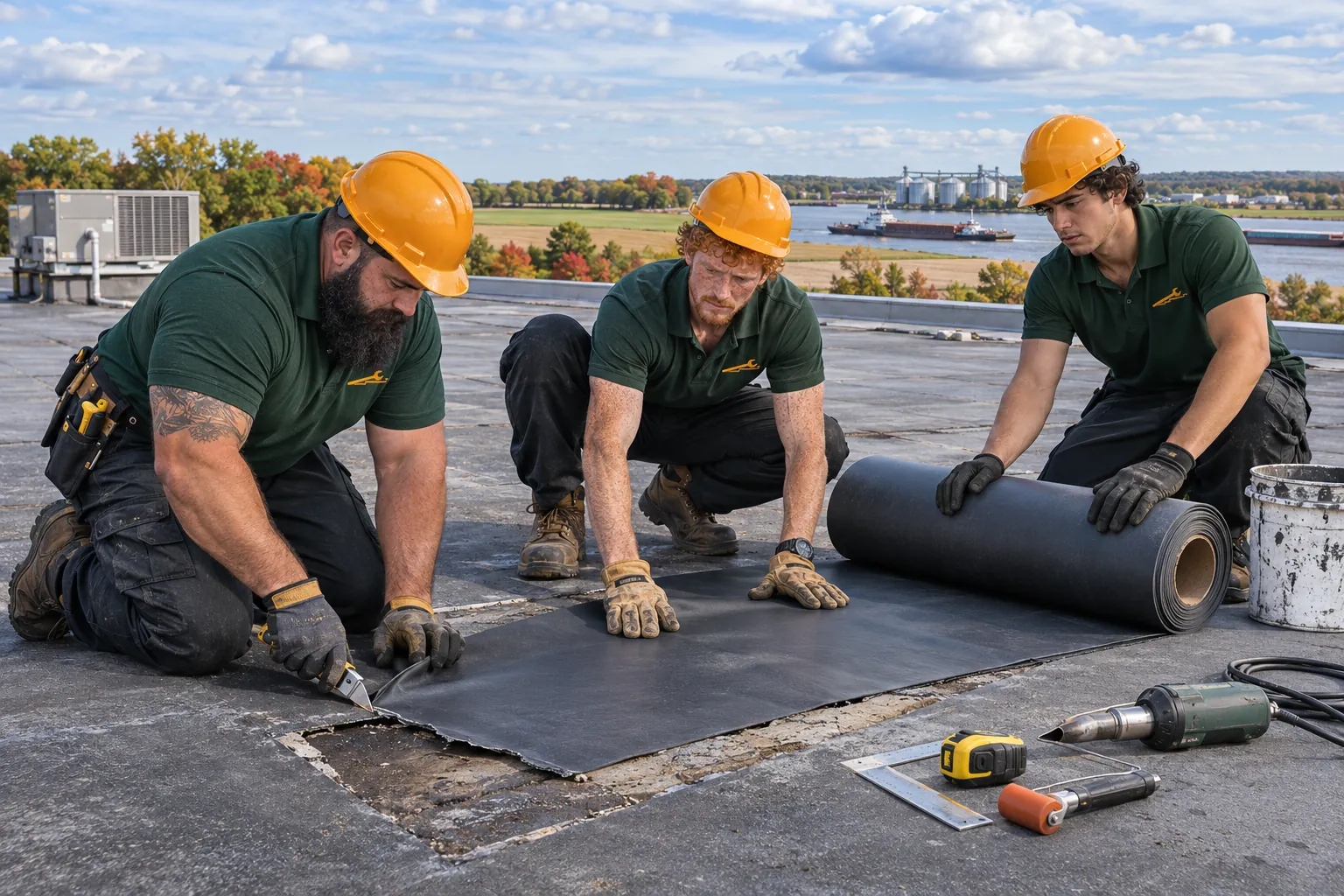
Calvert City commercial roof repair follows the plant's rules. At plants along the Tennessee River in Marshall County, residue on the membrane has to come off before anything will stick, and the seams near stacks and vents fail first where that film builds up.
Crews work under the plant's roof entry permits, fall protection rules, and work-zone limits around active exhaust. Repairs near process equipment wait for planned outages, and each repair material is checked against the chemicals that settle on that roof.
Plant roofs wear in patterns tied to what the plant releases and how often equipment gets serviced. These conditions come up most.
Process residue settles on the roof and blocks adhesion, so seams and patches near the source let go first. Cleaning to bare membrane is the first part of every repair there.
Heat and exhaust around stacks crack nearby flashing and wear the seams closest to the outlet. Those seams get rebuilt with material rated for the exposure.
Acid or caustic vapors etch metal panels and eat at fasteners. Replacement screws are chosen for that exposure so they hold up better than the standard screws they replace.
Foot traffic to fans, units, and hatches crushes the insulation into dips that hold water. Those sections are cut out to the deck and refilled with new board.
Big roofs depend on every drain. Missing clamping ring bolts and broken strainers let water run under the membrane instead of down the pipe.
Areas patched again and again around process outlets signal that the sheet has worn out there, which makes a section repair or restoration worth pricing.
Planned repairs keep a plant roof working without disrupting production. These are the gains from repairing it on the plant's schedule.
Cleaning residue off and choosing exposure-rated materials lets each patch hold as long as the sheet around it.
Lining up repairs near process equipment with planned outages keeps production running and keeps roof workers clear of active exhaust.
Sealed seams and working drains keep water off production lines, stored goods, and electrical gear under the roof.
Dated photos and a repair list give plant maintenance staff a running history of where the roof has failed and why.
Plant roofs need repairs matched to their exposure. These four options cover most Calvert City requests.
Softened or swollen membrane around fans and stacks is cut out and replaced with material that resists that stream.
Industrial roof repairNew clamping ring bolts, strainers, and drain flashing go in, and rusted scupper boxes are replaced along with their wall flashing.
Seams near residue are cleaned to bare membrane, then rewelded or covered with a fresh strip of matching sheet.
Flat roof repairInfrared scans after sunset show wet insulation spreading from a leak, narrowing a big roof down to a few details.
Roof leak repairCall with the location and the plant's entry rules. A temporary repair keeps water off the line until an outage allows the permanent fix.
Plant repairs start with paperwork and safety checks before anyone reaches the roof. The lanes show where each step happens.
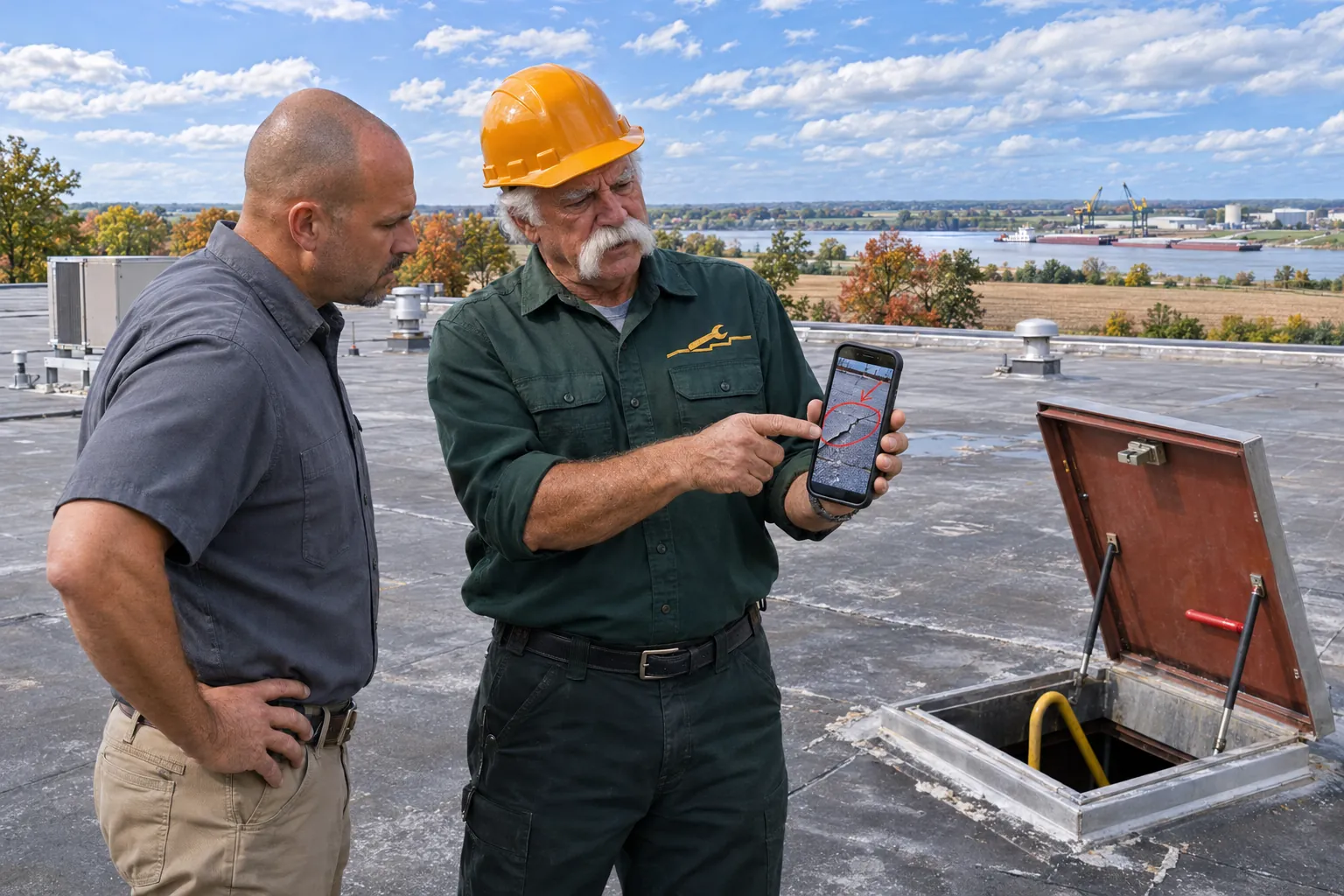
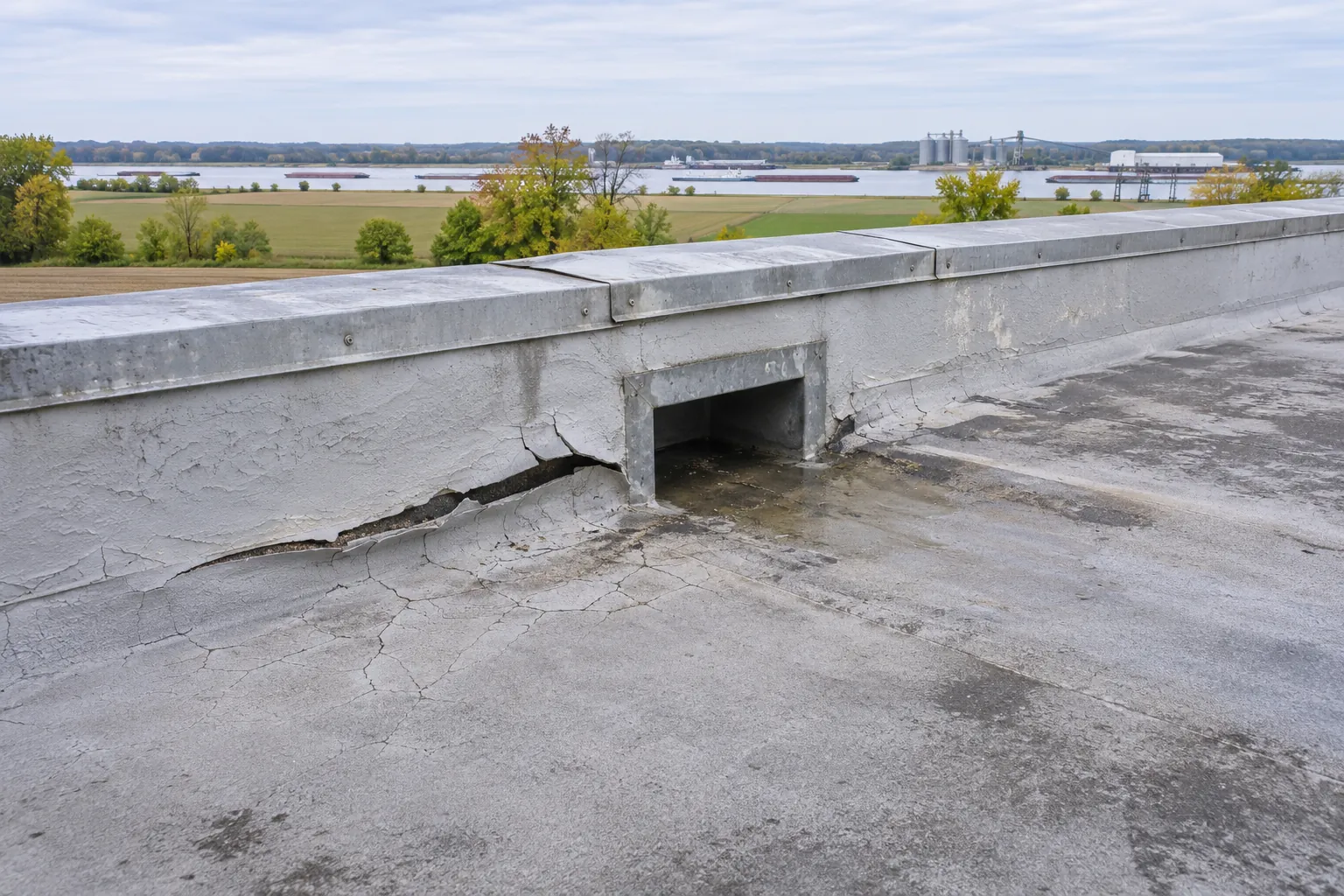
With an escort and a roof entry permit, we walk the roof zone by zone, marking residue buildup, worn seams near outlets, broken drain parts, and crushed board around units.
Plant safety and operations staff set roof entry permits, hot work rules, air intake shutdowns, and equipment lockouts, and flag stacks and vents that discharge on a cycle.
Every repair area is cleaned of process residue before patching, taping, or welding, so the new material grips the sheet instead of the film on top of it.
Each patch, reweld, or flashing repair is finished before the next zone opens, and work beside process equipment waits for the planned outage.
Maintenance staff get dated photos, the materials used at each spot, and a list of any remaining repairs ranked by how fast water gets in.
Commercial Roof Repair
Plant or shop outside Calvert City? Call us or send us a message. We cover commercial roof repair in Paducah, Mayfield, Murray, Benton, Eddyville, and the other towns listed by county.
McCracken County
Also served
Marshall County
Also served
Graves County
Debris punctures and lifted coping found on post-storm walks.
Mayfield Commercial Roof RepairCalloway County
Shops and barns where fasteners and laps are the usual leak points.
Murray Commercial Roof RepairLyon County
Also served
Livingston County
Also served
Ballard County
Also served
Caldwell County
Also served
They start with cleaning, since process residue on the membrane keeps patches, tape, and welds from bonding, and seams near stacks and vents fail first where that film builds up.
Crews follow the plant's roof entry permits, fall protection rules, and work-zone limits. Repairs near process equipment wait for planned outages, and every material is checked against the chemicals on that roof.
Grease and oil exhaust soften EPDM and some other membranes, causing swelling, wrinkling, and seam failure in a ring around the fan. Acid or caustic vapors etch metal panels and corrode fasteners. Repairs cut out the damage, add containment under grease fans, and use fasteners and materials rated for that exposure.
The Marshall County Building Office reviews and inspects construction in Calvert City, Benton, Hardin, and the county. Patching and resealing sit at the light end of the scale, while section replacements or rebuilt curbs for new equipment go through that office, alongside the plant's own work permits.
Most can, zone by zone. Work away from process equipment moves area by area with each repair finished before the next opens, and plant staff flag stacks and vents that discharge on a cycle so the work can be timed around releases and wind direction. Repairs right beside process equipment wait for a planned outage.
Restoration makes sense when the surface has weathered evenly, the insulation tests dry, and patches cover more of the roof than the original sheet. Plant exhaust data guides the coating choice, since it has to suit the chemicals that settle on the roof. Wide areas of wet insulation or a damaged deck point to replacement.
Send the plant address and your roof entry requirements. We will plan the inspection around your permits and outage calendar.