Open Seams On Membrane Roofs
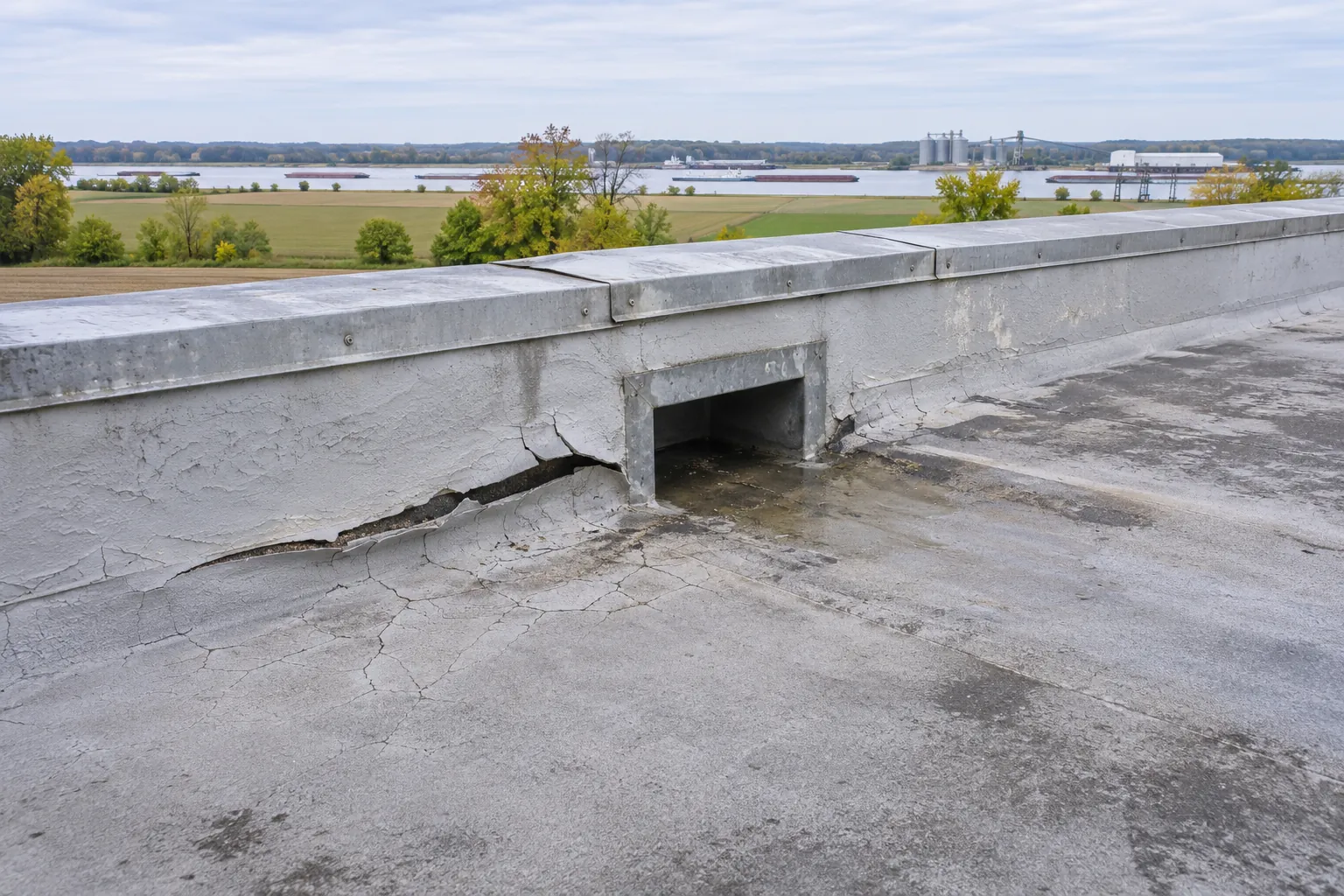
Heat cycling and age pull TPO welds and EPDM laps apart, usually at corners and T-joints. Water slips under the sheet and wets the insulation long before a stain reaches a ceiling tile.

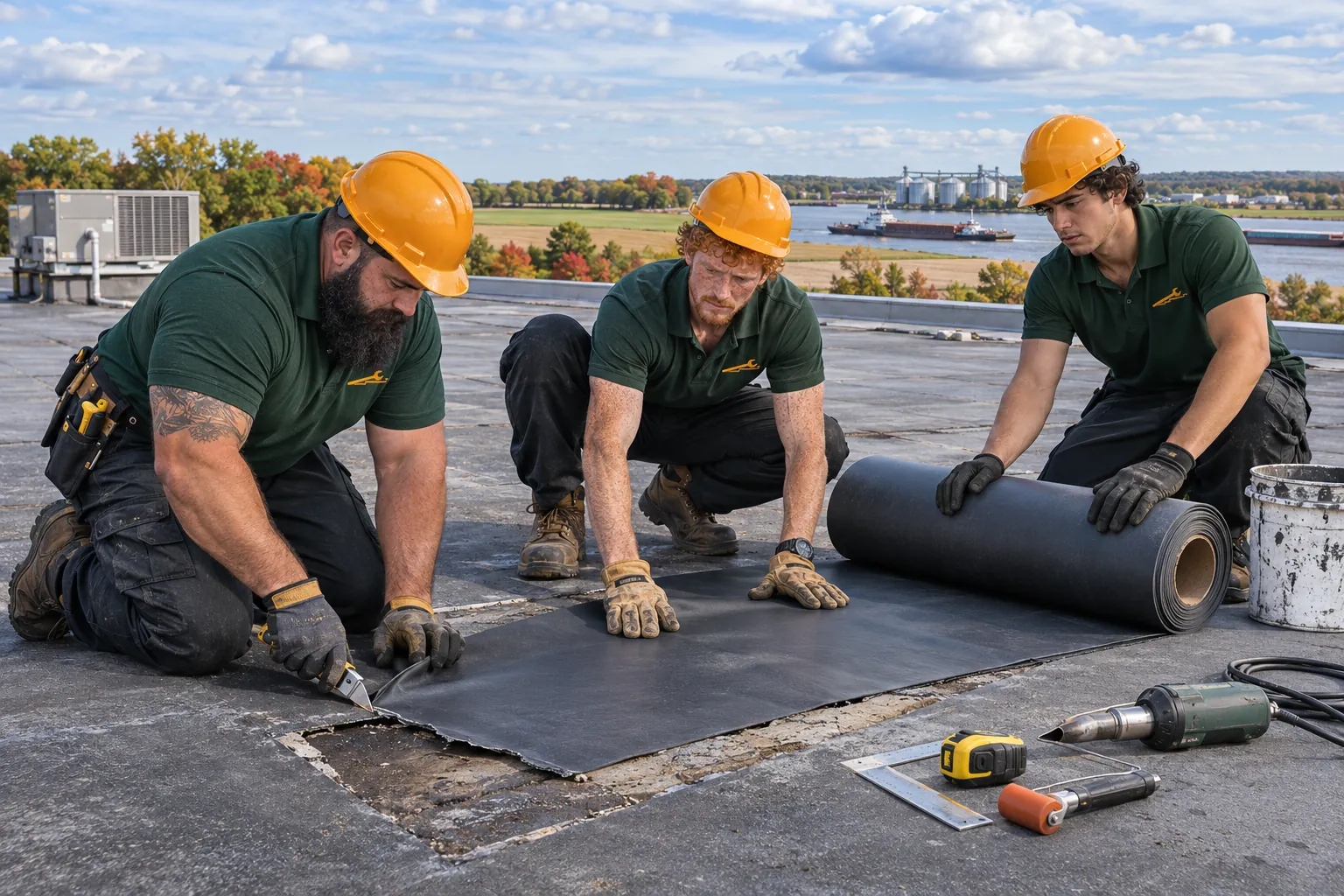
As a Paducah commercial roof repair contractor, we trace leaks and fix flat, metal, and industrial roofs on warehouses, shops, plants, and offices.
Most calls for Paducah commercial roof repair start with one of these six conditions, and each one traces back to a roof detail we can find and fix.
Heat cycling and age pull TPO welds and EPDM laps apart, usually at corners and T-joints. Water slips under the sheet and wets the insulation long before a stain reaches a ceiling tile.
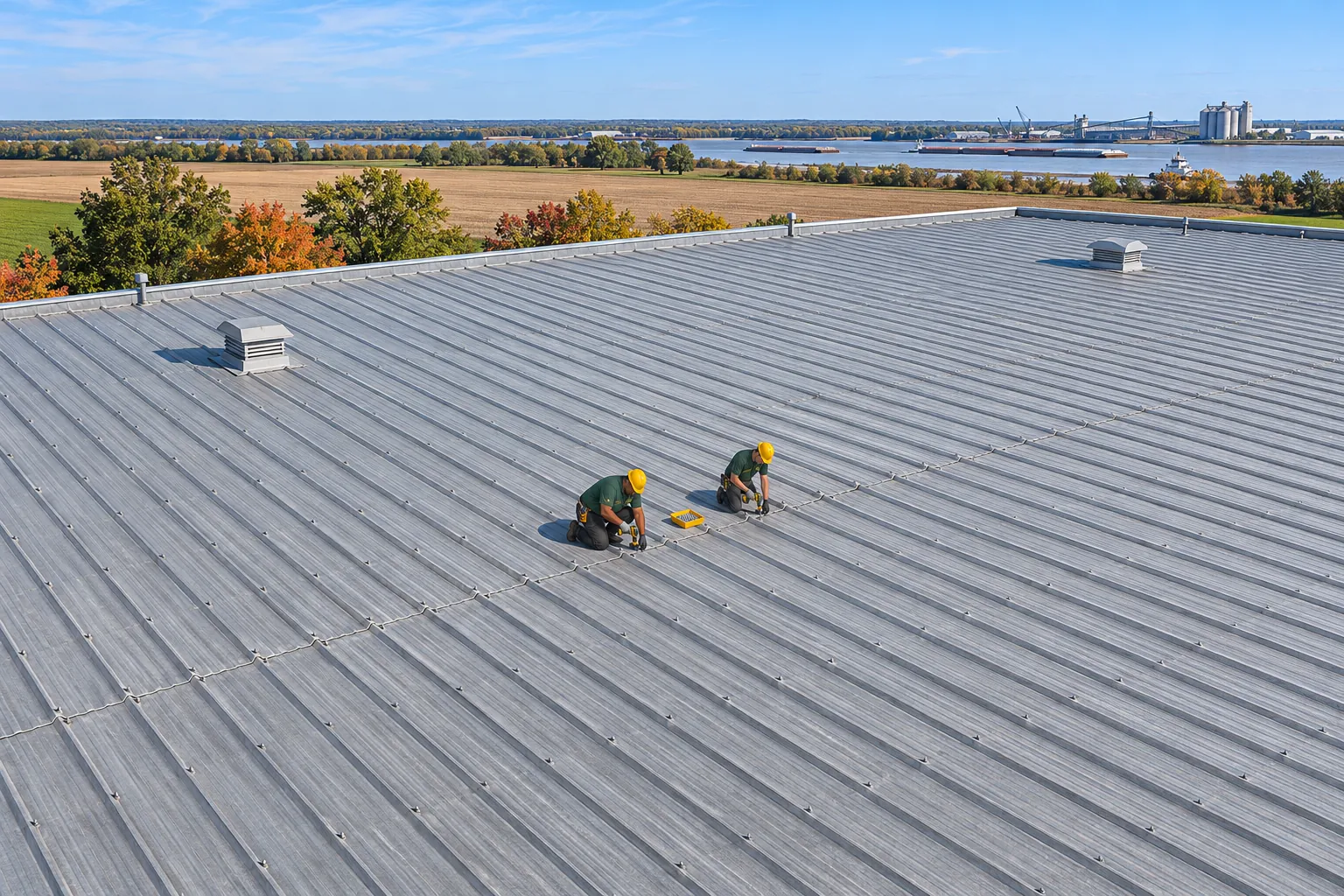
Steel panels grow and shrink with each day's heat, which loosens fasteners and cracks their rubber washers. The screw over a stain usually has neighbors along the same panel run that need the same fix.
Downtown brick buildings take water through open coping joints, cracked mortar, and loose counterflashing. Humidity off the Ohio River keeps that masonry damp after storms, so the wall feeds water behind the roof flashing.
Leaves, seed pods, and loose debris pack strainers until water backs up under the flashing. A drain missing its clamping ring bolts lets water run beneath the membrane instead of down the pipe.
Service techs walk the same path to every unit, crushing insulation and dropping screws on the sheet. Those dips hold water after rain and turn small cuts into wet board under the membrane.
Hail bruises membrane that still looks intact, and wind lifts edge metal, coping, and trim. We photograph each finding with the date so the damage ties back to the storm that caused it.
The state of the insulation and how far the damage has spread decide the job. A moisture scan and a few core cuts settle the question.
Where We Start
Four kinds of repair work cover nearly every commercial roof in the area. Each card names the usual fixes and the point where repair stops paying off.
TPO, EPDM, modified bitumen, and built-up roofs on warehouses, offices, and strip centers. Seams get rewelded or retaped, punctures patched, and flashing rebuilt with membrane that matches the roof.
Common Fixes
Repair Stops Here
Wet insulation across large areas, membrane shrinking off the walls, or cracking across the whole field.
R-panel and standing seam roofs on shops, barns, and steel buildings. Repairs reach the fasteners, end laps, trim, and gutters where a steel roof takes on water first.
Common Fixes
Repair Stops Here
Steel that has thinned or rusted through at the eaves and end laps needs new panel sections.
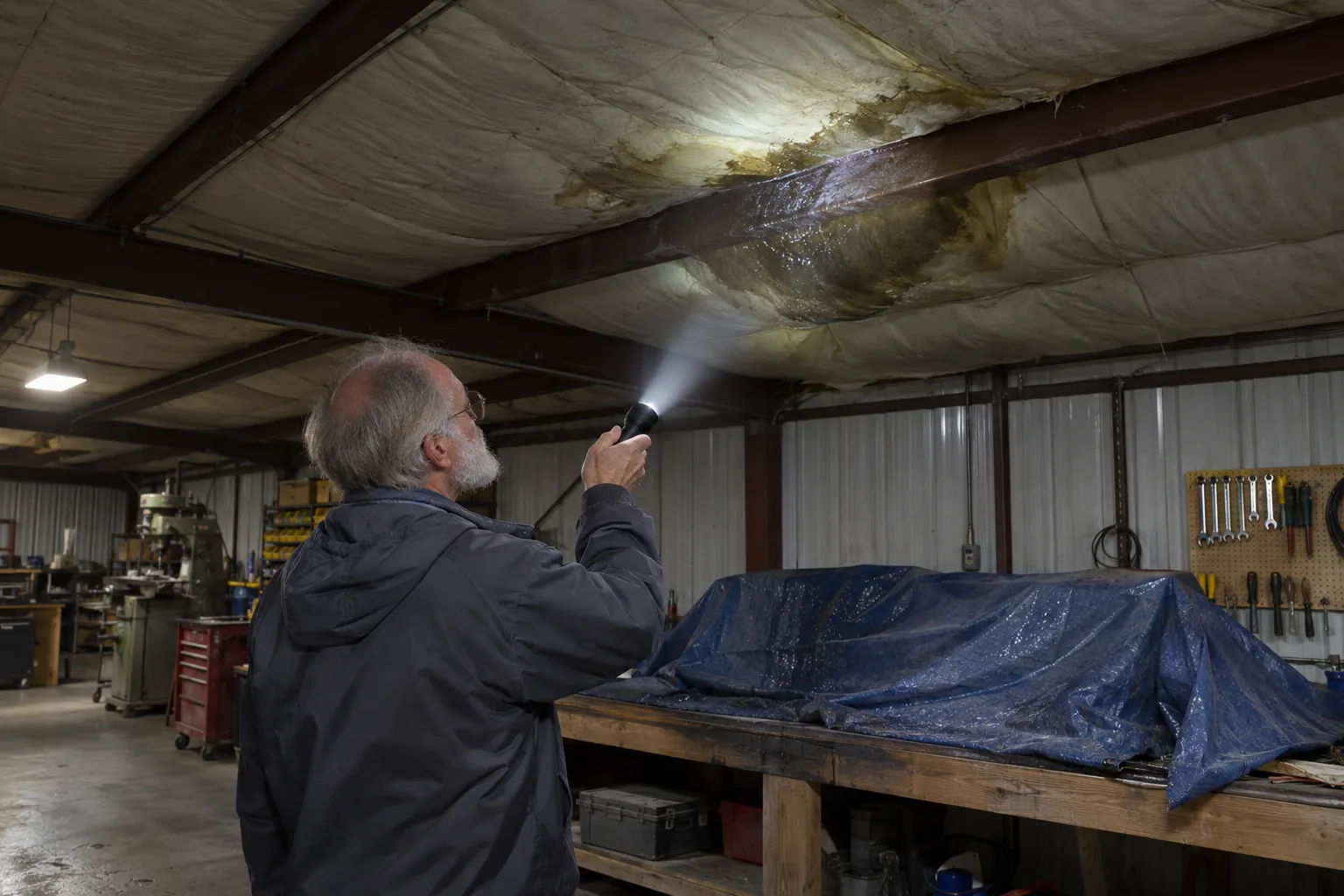
That stain on the ceiling tile with no obvious cause overhead. We work from the wet spot back up the deck flutes to the seam, curb, or fastener feeding it.
Common Fixes
Repair Stops Here
Leaks that turn up in a new place every season point to a roof-wide failure.
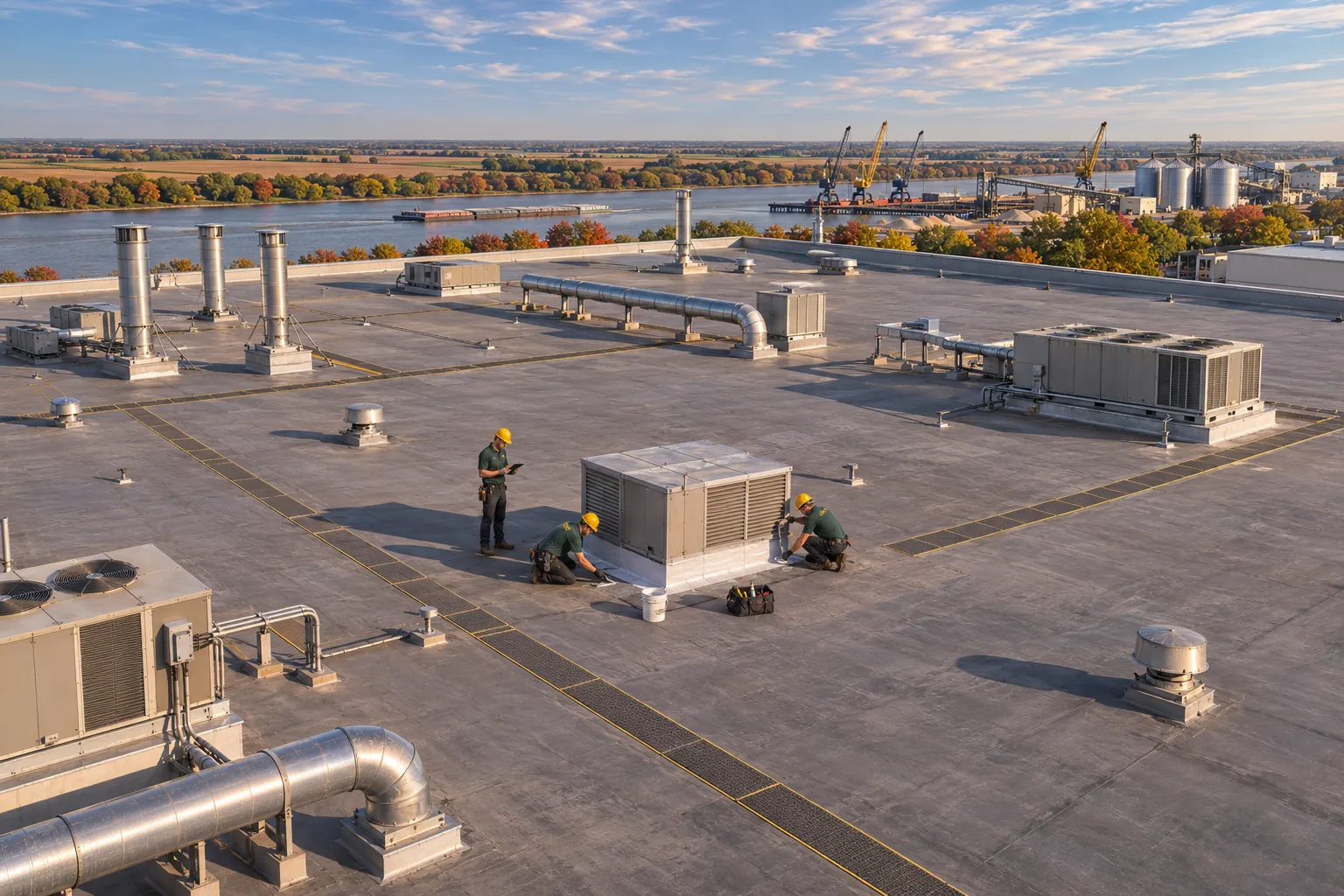
Plant and distribution roofs with exhaust stacks, process fans, and steady equipment traffic. Work follows the plant's roof entry permits, lockouts, and outage calendar.
Common Fixes
Repair Stops Here
Patches covering more of the roof than the original sheet does signal time to price a restoration.
Call and tell us where the drip lands. We can seal the source temporarily during the storm and return for the permanent repair once the roof is dry.
Each visit moves between the roof and the rooms under it. The two lanes show where every step happens.
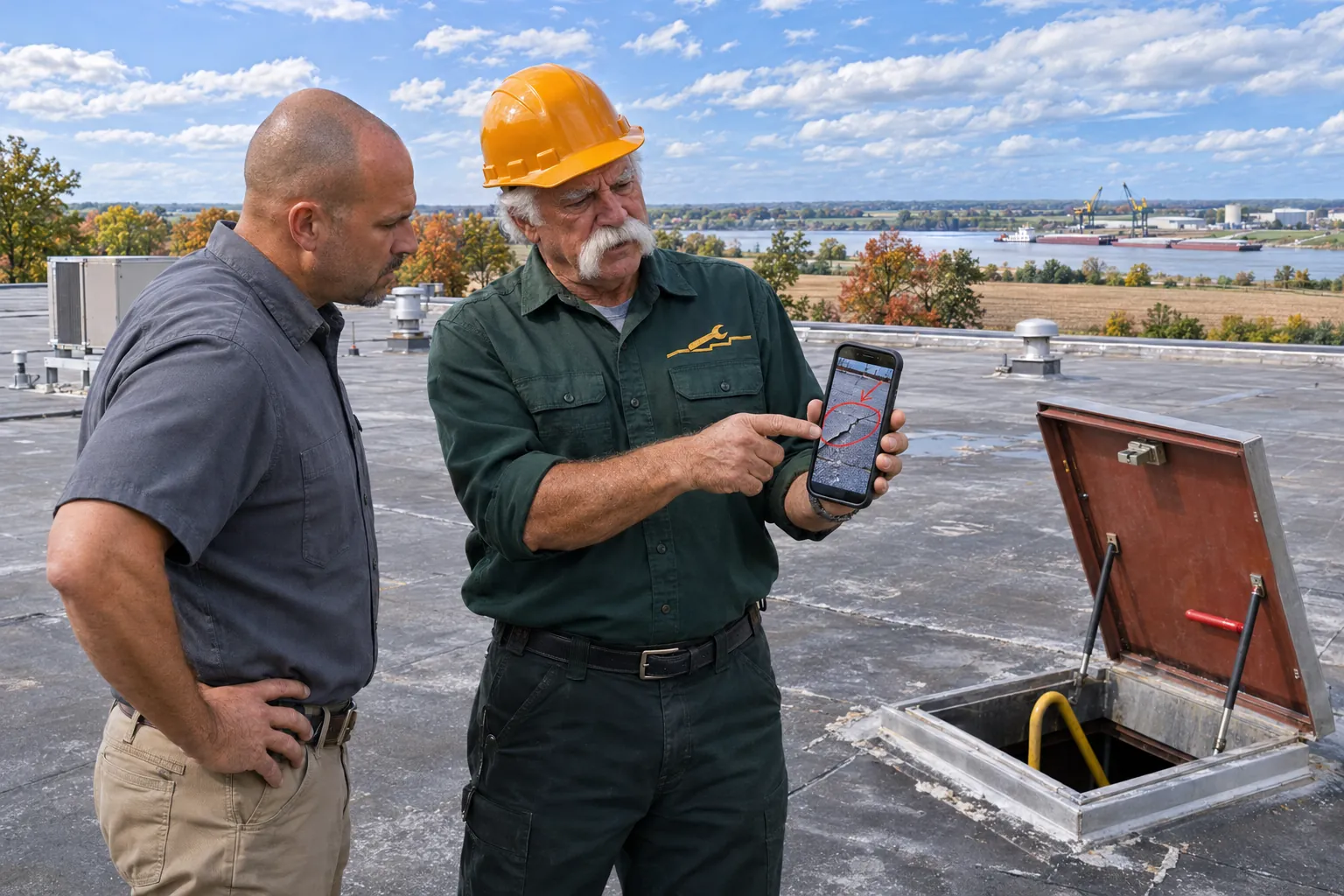
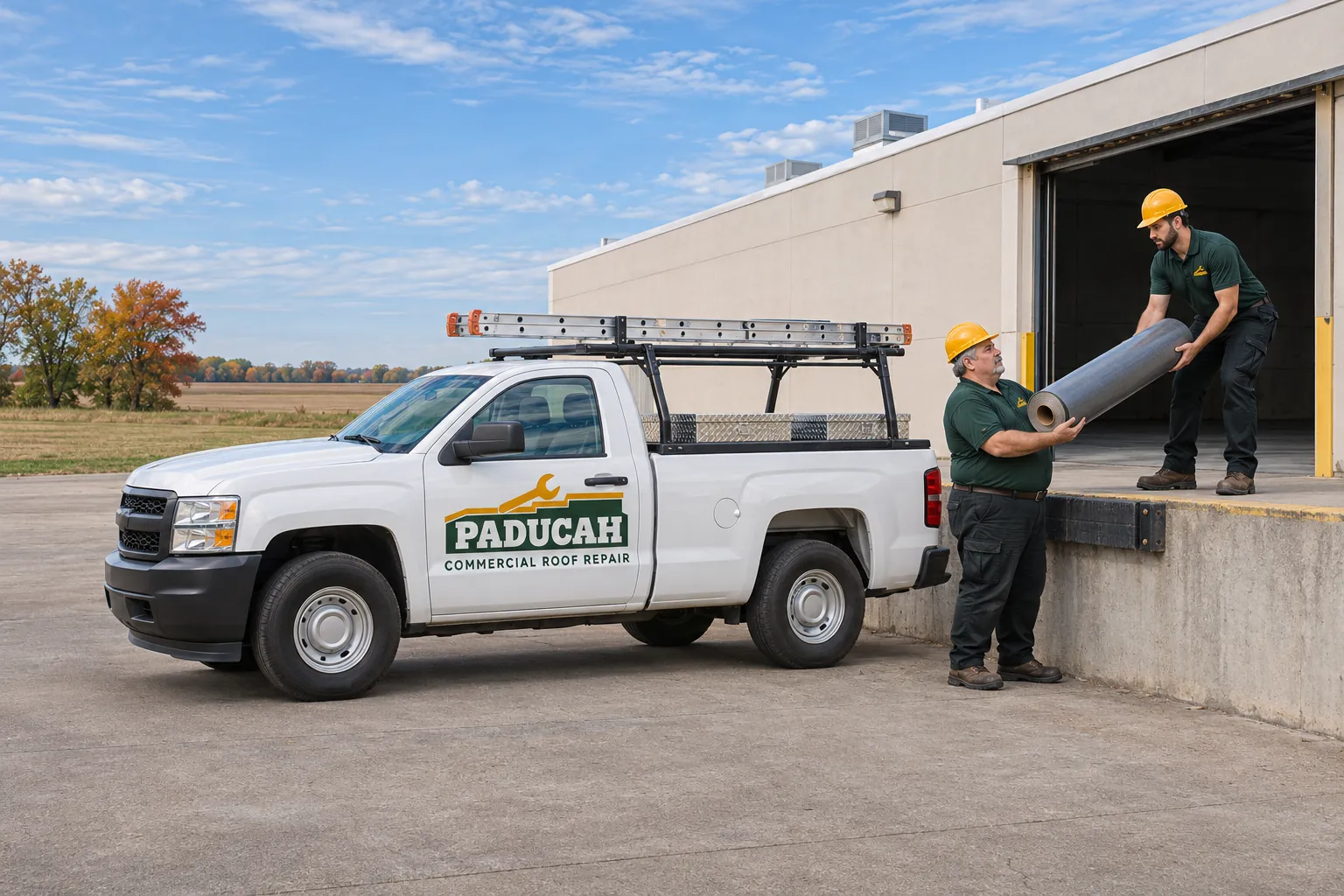
We walk every seam, flashing, drain, and fastener line above the reported leak, probing laps and marking soft insulation so each finding has a place on the roof.
Inside, each stain is measured from two walls and photographed. Those numbers match a ceiling spot to the roof area feeding it, even when water runs along the deck flutes first.
Soft or wet insulation under a leak is cut out to the deck and replaced with new board, so the repair sits on a dry, firm base.
The seam, flashing, boot, or panel lap is rebuilt with material that matches the roof: welded TPO, taped EPDM, or the same steel profile with new fasteners.
You get photos and a list of what was fixed, plus any other trouble spots ranked by how fast water is getting in, so the next repair can be budgeted.
A well-timed repair keeps the rest of the roof working. These are the gains owners see when a leak is fixed early.
Fixing a leak early keeps the job to one patch and a short section of insulation. Left alone, the same spot grows into a cut-out several feet wide.
Wet polyiso loses much of its insulating value and holds water against the deck. Stopping the leak at the seam or pipe boot keeps that board dry and working.
Every season of dripping adds stained ceiling tiles, wet inventory, and rust along steel deck flutes. A rebuilt flashing ends that cycle where it starts.
Each visit adds dates, photos, and locations to the roof's history. That record shows when repairs cluster along the same laps and a bigger fix is worth pricing.
Not sure your building is in our area? Call us or send us a message. We repair commercial roofs in Paducah, Mayfield, Murray, Benton, Calvert City, Eddyville, and the towns listed under each county.
McCracken County
Downtown brick, riverfront warehouses, and industrial parks, from parapet leaks to plant roofs.
Paducah Commercial Roof RepairAlso served
Marshall County
Lake humidity that rusts panel ends, gutter hangers, and screw heads.
Benton Commercial Roof RepairPlant roofs where process residue has to come off before a patch will bond.
Calvert City Commercial Roof RepairAlso served
Graves County
Storm checks for lifted edge metal, debris punctures, and torn gutters.
Mayfield Commercial Roof RepairCalloway County
Metal shops and farm buildings where condensation gets mistaken for a leak.
Murray Commercial Roof RepairLyon County
Leaf and seed debris that clogs drains and backs water under the eaves.
Eddyville Commercial Roof RepairAlso served
Livingston County
Also served
Ballard County
Also served
Caldwell County
Also served
It covers the parts of a commercial roof that wear out before the rest: seams, flashings, drains, fasteners, curbs, and damaged patches of membrane or steel.
That includes TPO, EPDM, modified bitumen, and built-up flat roofs, plus R-panel and standing seam metal with its gutters, ridge caps, and trim. Warehouses, plants, shops, churches, schools, offices, and farm buildings all fit. Houses go to residential roofers.
After hail or high wind, we walk the whole roof for lifted edge metal and coping, punctured or bruised membrane, dented panels at the laps, cracked skylights, and torn gutters.
Suspect spots get pressed by hand to find crushed insulation under membrane that looks fine. Every finding is photographed with the date, which helps tie the damage to a recorded storm for an insurance claim.
Three things drive most of the price: how many leak sources the roof has, how much wet insulation must come out, and how hard the area is to reach.
Roof type, building height and lift needs, plant safety rules, permits, and any temporary work add to it. Rotten deck or rusted panels found after the roof is opened change the scope, and a log of past leaks shortens the search.
Inside city limits, the City of Paducah issues building permits through its Fire Prevention Division at City Hall, and county addresses go to the McCracken County Inspection Department.
A Paducah mailing address can mislead, since Reidland carries one and sits outside the city. A patched puncture sits at the light end, while replacing roof sections, rebuilding a curb, or swapping rusted panels leans toward renovation, which needs a permit.
Inspection pairs a look at the stains inside with a walk over every seam, flashing, drain, and fastener above them.
We record photos and notes on interior stains measured from the walls, damaged laps and flashings upslope, wet insulation found by probing or scanning, and drains or gutters that hold water. You get a repair list ranked by how fast water is getting in.
Tell us where the water shows up and what kind of roof sits over it. We will set up a roof walk and send you a ranked repair list.