Grease Rings Around Fans
Grease and oil exhaust soften EPDM and some other membranes in a ring around the fan, causing swelling, wrinkles, and seam failure where the discharge settles.
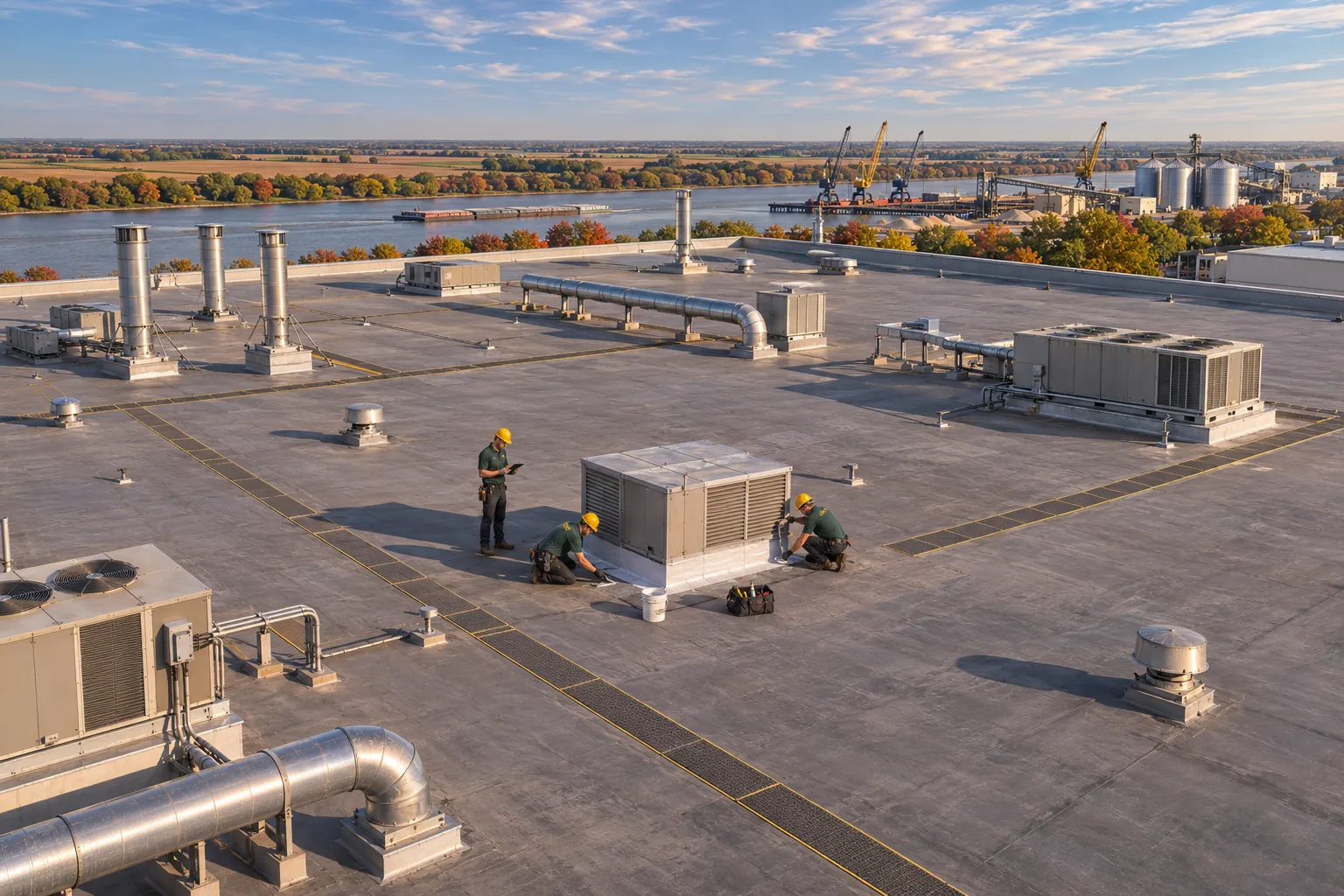
Paducah industrial roof repair for plants and distribution buildings, scheduled with your safety staff around permits, lockouts, exhaust cycles, and planned outages.
Every Paducah industrial roof repair has to fit the plant's schedule and the chemicals on the roof, so the right job turns on condition and on what the stacks discharge.
Where Plant Roofs Start
Plant roofs take damage that office and retail roofs rarely see. These six problems show up most on industrial buildings.
Grease and oil exhaust soften EPDM and some other membranes in a ring around the fan, causing swelling, wrinkles, and seam failure where the discharge settles.
Acid or caustic vapors etch metal panels and eat fasteners, and the screws closest to vents fail first. Replacement screws need a rating for that exposure.
Heat from process stacks cracks the flashing around them over repeated cycles, opening gaps at the base where water runs straight into the deck.
Missing or loose clamping ring bolts let water slip under the membrane at the drain bowl, wetting insulation across a wide area of a big roof.
Service traffic around units, fans, and roof hatches crushes insulation into dips that hold water, and dropped metal shavings leave rust stains and small holes.
Large roofs collect repairs year after year. When patches cover more of the roof than the original sheet does, the roof is ready for a restoration price.
Industrial repairs remove the damage and change the conditions that caused it. These four cover most plant roof calls.
Softened membrane is cut out and patched with a grease-resistant material, containment boxes or pads go under kitchen and process fans, and chemical resistance charts guide the material.
Missing bolts are replaced and the clamping ring reset, broken strainers swapped, torn drain flashing replaced with a new target sheet, and rusted scupper boxes rebuilt with new wall flashing.
Crushed insulation is cut out to the deck, filled with new board, and covered with a membrane patch, and walkway pads go where service techs keep walking.
Corroded screws near vents and stacks give way to fasteners rated for the exposure, so the new screws hold up in the same air that ruined the old ones.
Repairs planned with plant staff keep the roof dry over production lines and keep roof work out of the way of operations.
Work away from process equipment moves zone by zone, with each patch, reweld, or flashing repair finished before the next roof area opens.
Entry permits, hot work rules, air intake shutdowns, and lockouts are set before anyone climbs up, and work near cycling vents follows the release schedule and wind.
Checking each repair material against the chemicals that settle on the roof keeps patches from softening or failing early in the exhaust zone.
Tracking repairs across a big roof shows when the surface has weathered evenly over dry insulation, the point where restoration beats more patching.
Repairs near process equipment fit best inside a shutdown. Schedule a roof walk ahead of the outage so the repair list is ready when the equipment stops.
Plant roof work needs as much coordination on the ground as work on the roof. Each step sits in the lane where it happens.
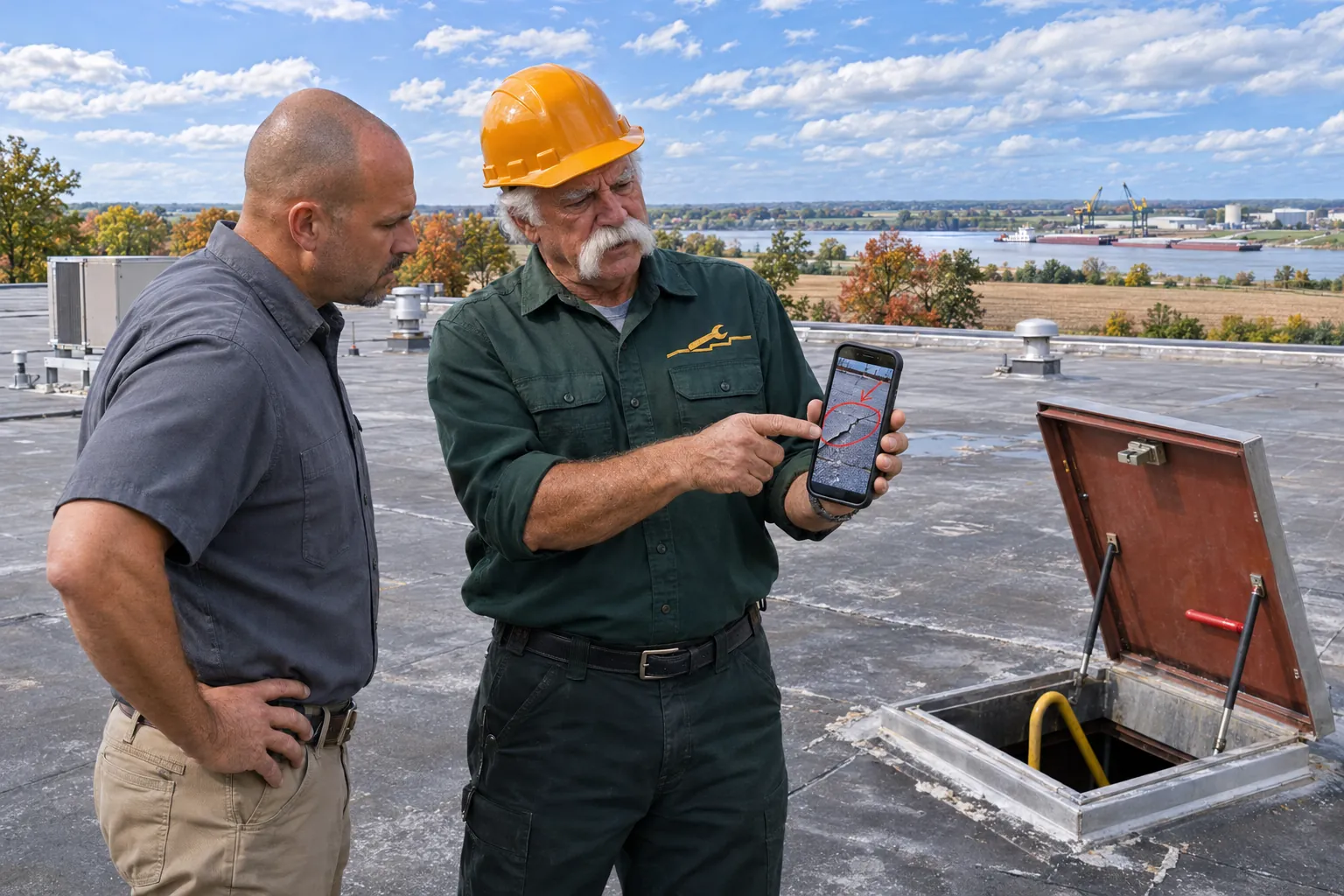
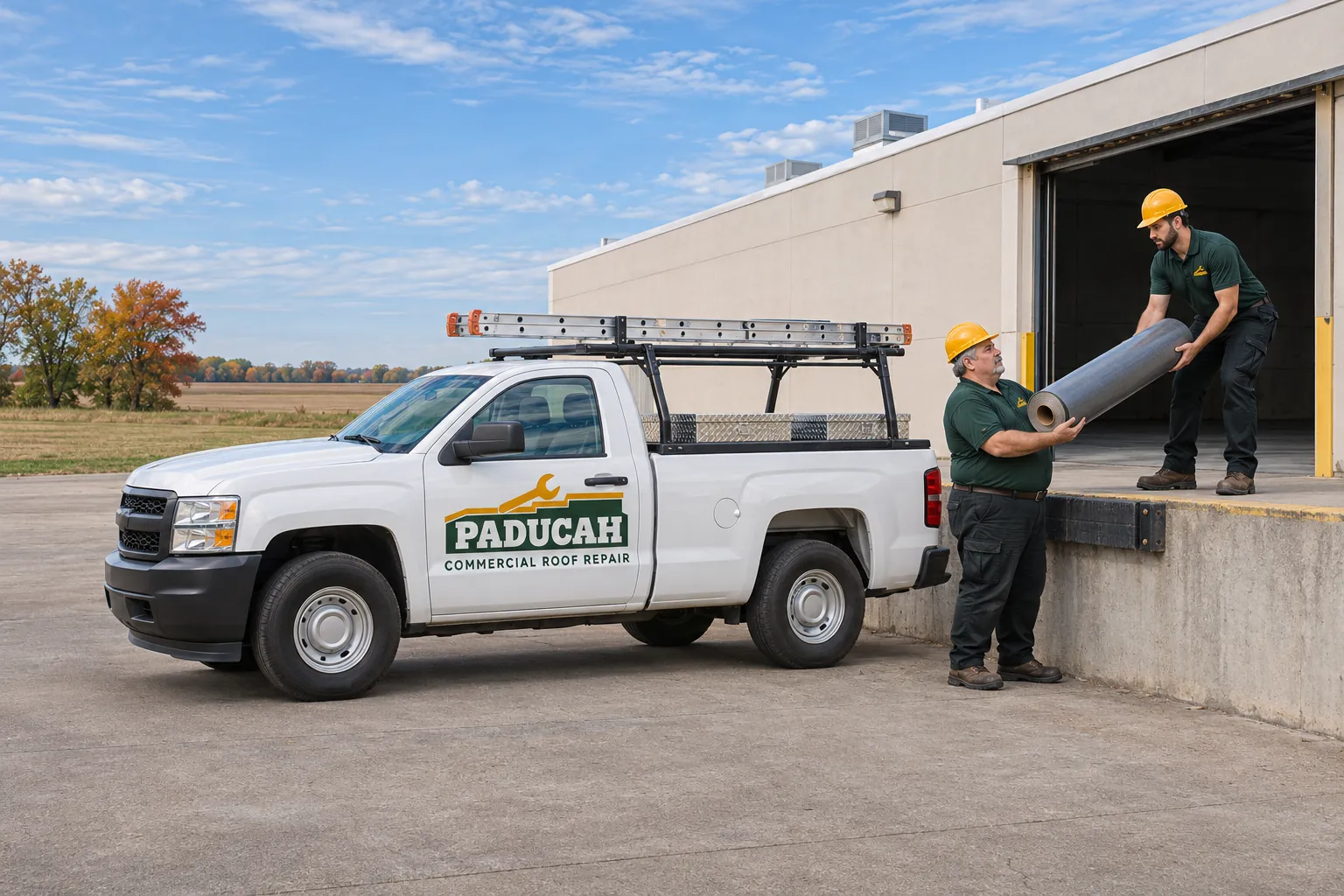
Drains, scuppers, seams around fans and stacks, and the zones around units and hatches get walked first, with chemical damage and crushed board marked on a roof plan.
Roof entry permits, hot work rules, intake shutdowns, lockouts, and fall protection are set with safety staff, and stacks that release on a cycle are flagged for timing.
Process residue keeps patches, tape, and welds from bonding, so each repair area is cleaned down to fresh membrane or bare metal before work begins.
Each patch, reweld, drain rebuild, or flashing repair is finished before the next zone opens, and work near active exhaust waits for the right wind and cycle.
Plant staff get photos, the roof materials used in each zone, and a list of repairs that should wait for the next planned outage.
Industrial properties often include offices, warehouses, and steel outbuildings. These services cover those roofs.
Office wings and warehouses with TPO or EPDM need seam welds, tape, and drain fixes without the exhaust planning a process roof needs.
Flat roof repair in PaducahSteel storage buildings and maintenance shops leak at screws and end laps, which is fastener and lap work rather than membrane repair.
Metal roof repair in PaducahLeaks over production lines that move between storms need tracing from the stain before a roof zone is opened.
Leak tracing in PaducahScheduling starts with plant safety and operations staff, so roof entry permits, hot work rules, air intake shutdowns, and equipment lockouts are in place before anyone climbs up.
Repairs near process equipment usually wait for a planned shutdown. Elsewhere the work moves zone by zone, finishing each repair before the next area opens, and work near cycling stacks follows their release schedule and the wind direction.
Grease and oil exhaust soften EPDM and some other membranes, so the sheet swells, wrinkles, and loses seams around the fan. Acid or caustic vapors etch metal panels and corrode fasteners, and stack heat cracks nearby flashing.
Repairs cut out softened membrane and patch it with a grease-resistant material, add containment boxes or pads under fans, and swap corroded screws for fasteners rated for the exposure.
Most drain repairs replace missing clamping ring bolts, broken strainers, and torn membrane flashing at the bowl, since loose bolts let water run under the membrane.
Scuppers leak where the box meets the parapet wall, through rusted seams in the box, or where an overflow opening is blocked, and they get a new box and wall flashing. Leaks in drain piping inside the building go to a plumber.
Crushed insulation and cover board are replaced, cuts and punctures patched, and walkway pads laid where service techs keep walking.
Crushed board shows up as a dip that holds water after rain, so that section is cut to the deck, refilled with new board, and covered with a membrane patch. A quick sweep after each equipment visit removes the shavings and screws that start the next round.
Restoration fits once the surface has weathered evenly, the insulation tests dry, and patches are starting to cover more roof than the original sheet.
The process cleans the roof, repairs every seam, flashing, and fastener, and applies a fluid-applied coating chosen for the chemicals that settle there, guided by plant exhaust data. Wet insulation over large areas or a damaged deck sends the roof to replacement instead.
Yes, for most zones away from process equipment. Each area is permitted, isolated, and finished before the next one opens, so production lines below keep running.
Work beside fans or stacks that discharge on a cycle is timed around their release and the wind, and repairs on top of active process equipment are saved for the next planned outage.
Share the roof size, the processes that vent onto it, and your next outage window. We will walk the roof with your safety staff and build a zone-by-zone repair list.